 Comparison
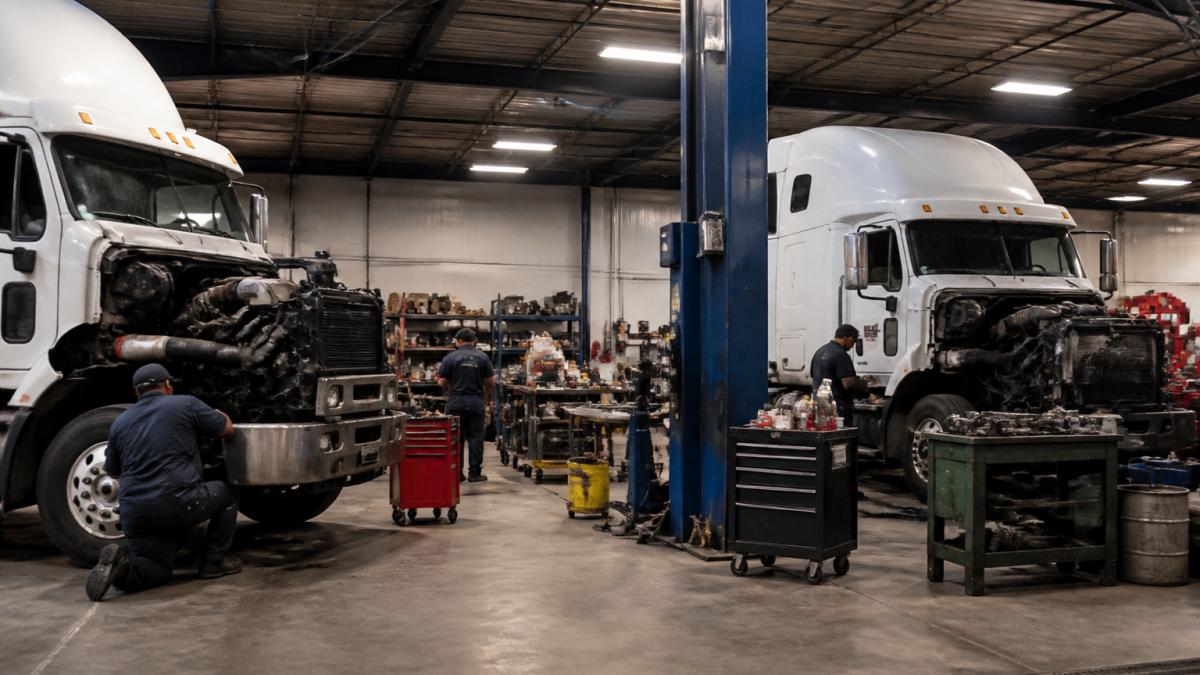
Truck Roadside Assistance Providers for Fleets vs In-House Repair
Last Updated: November 21, 2026
Quick Summary
Most fleets need a hybrid of truck roadside assistance providers and in-house repair, because providers give you geographic reach and 24/7 dispatch without payroll while in-house repair gives you control and faster diagnosis on your own equipment. Neither option wins outright, so the decision comes down to where your trucks break down and how fast you can get them back on the road.
- Providers scale coverage with fleet size and eliminate the cost of idle technicians.
- In-house repair makes sense only when volume keeps a bay and tech busy year-round.
- Ask every provider for dispatch-to-arrival times in your coverage zone, not national figures.
- Commercial plans often exclude heavy-duty recovery for loaded trailers and after-hours labor surcharges.
- Some memberships cap the number of service calls per vehicle per year.
Table of Contents
- Truck Roadside Assistance Providers for Fleets vs In-House Repair: The Core Trade-Off
- Side-by-Side Comparison of Fleet Roadside Assistance Providers
- Commercial Roadside Assistance Plans: What They Cover and What They Exclude
- Commercial Truck Roadside Assistance Membership vs Pay-Per-Call
- 24 Hour Truck Roadside Assistance Providers for Fleets: Response Metrics That Matter
- Tow Truck Roadside Assistance Providers for Fleets: Towing, Recovery, and On-Site Repair
- Total Cost of Ownership: Comparing Plans, Contracts, and Downtime
- Coverage Gaps, Rural Performance, and Fleet Reporting Integrations
- Frequently Asked Questions
Truck Roadside Assistance Providers for Fleets vs In-House Repair: The Core Trade-Off
When a tractor-trailer goes down on the shoulder, every minute of downtime costs money you never recover.
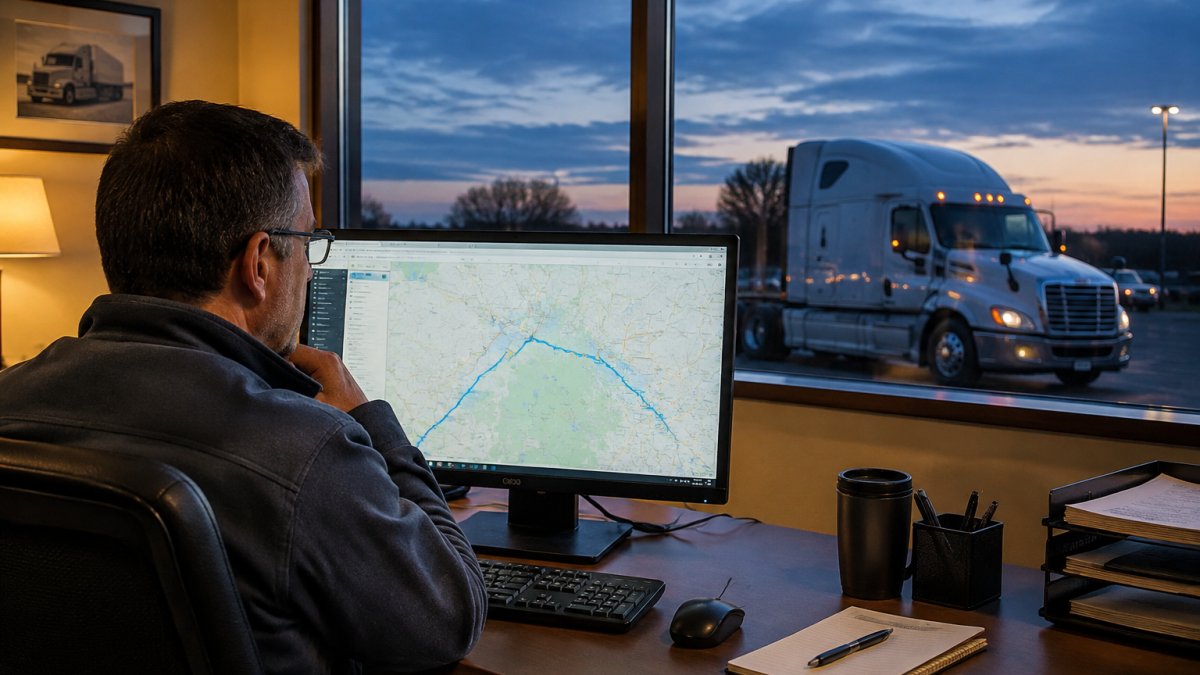
Here is the core trade-off in plain terms. Providers give you geographic reach and 24/7 dispatch without payroll.
Truck roadside assistance is a dispatched service that sends a mobile technician or tow unit to a disabled commercial vehicle. The provider handles the call, the dispatch, and the repair or recovery.
The trade-off breaks down like this:
- Providers scale coverage with your fleet size and eliminate the cost of idle technicians.
- In-house repair makes sense only when you have enough volume to keep a bay and a tech busy year-round.
- Hybrid models combine a provider contract for the road with in-house preventive maintenance at the yard.
Most guides frame this as a simple cost question. It is not. It is a question about where your trucks break down and how fast you can get them back on the road.
Side-by-Side Comparison of Fleet Roadside Assistance Providers
The best provider for your fleet depends on coverage area, dispatch speed, and how much heavy-duty work the network can actually handle. Below is a side-by-side look at the options fleets commonly evaluate, scored on the same criteria so you can compare like with like instead of comparing marketing pages.
| Provider | Dispatch Model | Heavy-Duty Focus | Published Service Terms | Fleet Integration | Best For |
|---|---|---|---|---|---|
| Fairfield Truck Repair | Local dispatch plus fleet maintenance | Yes, heavy-duty diesel | Available on request | Maintenance and roadside in one relationship | Fleets wanting one partner for roadside and shop work |
| Best Roadside Service | 24/7/365 dispatch | Vans and box trucks | Membership terms published | Limited | Light and medium fleets needing round-the-clock dispatch |
| Cox Fleet Roadside Assistance | One-call coordination | Emergency truck service | Contract terms vary by fleet | Account-level reporting | Fleets wanting a large provider network |
| FleetNet America | Network-based | Cargo van and box truck | Network terms vary by region | Limited | Small fleets evaluating options |
| Geotab and Agero | Telematics-linked | Breakdown access | Telematics-linked terms | Telematics-triggered dispatch | Fleets already running Geotab |
How We Evaluated Each Provider
Fleets evaluating providers should look at dispatch availability, whether the network handles heavy-duty diesel, how clearly service terms are published, whether it integrates with fleet maintenance or telematics, how it reports incidents back to the fleet, and whether it publishes response-time methodology rather than a single average. A provider that cannot confirm heavy-duty coverage is a risk for anyone running Class 7 or 8 trucks, no matter how good its marketing looks.
A Provider Selection Checklist for Fleet Buyers
Use the same questions for every provider you shortlist, and score the answers rather than the sales pitch:
- Fleet size and vehicle mix: Can the provider confirm coverage for every class you run, including loaded trailers and heavy-duty diesel?
- Routes and geography: Will it quote response expectations for your three most remote regular lanes, not just a national average?
- Uptime targets: What is the on-site repair rate versus the tow rate, and what is the escalation path when the first unit cannot fix the truck?
- Existing maintenance arrangements: Does the provider coordinate with your shop or maintenance partner, or does it compete with them?
- Contract terms: Are call caps, surcharges, and after-hours labor rates published before you sign?
- Reporting and integrations: Does it feed per-vehicle breakdown history into your fleet management system or telematics platform?
Watch out: a provider that cannot answer the route and vehicle-mix questions in writing is a risk regardless of how strong its national coverage map looks.
For a deeper look at what coverage should include, see our emergency roadside assistance for semi trucks guide.
Commercial Roadside Assistance Plans: What They Cover and What They Exclude
Commercial roadside assistance plans often cover towing, jump-starts, flat tire service, fuel delivery, and lockout help. Exclusions vary by plan, so read them carefully before you sign.
Read the exclusions before you sign. A plan that covers a tire change but not a loaded recovery leaves you exposed on the exact calls that hurt most.
Common inclusions:
- Towing to a repair facility within a mileage limit
- Battery assistance and jump-starts
- Flat tire and tire service
- Fuel delivery
- Lockout assistance
Common exclusions:
- Heavy-duty recovery for loaded trailers
- Repairs beyond the roadside diagnosis
- After-hours or holiday labor surcharges
- Damage from accidents or cargo shifts
For a deeper breakdown of what semi truck coverage should include, see our emergency roadside assistance for semi trucks guide.
Commercial Truck Roadside Assistance Membership vs Pay-Per-Call
A commercial truck roadside assistance membership charges a recurring fee for priority dispatch and defined coverage. Pay-per-call means you pay only when you use it, at whatever the market rate is that night.
Membership wins when your trucks run high miles in unfamiliar territory. Pay-per-call wins when your fleet is small, local, and rarely breaks down far from your own shop.
Whether a membership pays off depends on how often your fleet calls for help and where it operates. Run the numbers on your own call history before choosing.
Watch out: some memberships cap the number of service calls per vehicle per year. Read that clause before you assume you are covered.
24 Hour Truck Roadside Assistance Providers for Fleets: Response Metrics That Matter
The metric that matters most is not the advertised average response time. It is the response time in your actual operating territory, at the hour your trucks actually run.
Part of the problem is that "response time" means different things to different providers. Before you compare numbers, make every provider define the clock the same way:
- Call answer time: how long before a live person picks up, versus a queue or automated menu.
- Dispatch time: how long from call answer to a unit being assigned.
- Arrival time: how long from dispatch to the unit reaching the vehicle.
- Repair-completion time: how long from arrival to the vehicle being road-ready or hooked to a tow.
A provider can look fast on arrival and slow on repair completion, or fast on dispatch and slow on arrival in rural zones. Ask for each interval separately, by coverage zone and by time of day.
Ask every provider for these numbers before you sign:
- Average dispatch-to-arrival time in your coverage zone, not a national figure
- Percentage of calls answered by a live person versus a queue
- Escalation path when the first dispatched unit cannot handle the repair
- On-site repair rate versus tow rate
- Whether the provider measures response time from call answer, dispatch, or arrival
Some providers publish average response times. Confirm what clock any published figure starts on and whether it applies to your lanes. A common pattern is that providers publish the most favorable interval and leave the others on request.
How to Compare Response-Time Methodology
When two providers quote similar averages, the tiebreaker is methodology. Ask whether the average is a mean or a median, whether it excludes calls outside the coverage zone, and whether it is measured across all vehicle classes or only light-duty. A median that includes heavy-duty rural calls is a more honest number for a fleet than a mean that excludes them.
For more on vetting 24/7 reliability, read our guide on finding reliable 24 hour roadside assistance.
Tow Truck Roadside Assistance Providers for Fleets: Towing, Recovery, and On-Site Repair
On-site repair can shorten a breakdown considerably. Some providers dispatch a mobile technician who can fix minor mechanical failures at the roadside before anyone hooks up a tow.
When on-site repair is not possible, recovery takes over. Confirm upfront whether the provider handles loaded-trailer recovery and what equipment it sends. If you are weighing whether a roadside fix or a shop visit saves more, our comparison of mobile truck repair vs shop service walks through the cost difference.
Total Cost of Ownership: Comparing Plans, Contracts, and Downtime
Total cost of ownership is a useful way to compare in-house and provider options. Plan price is only one part of the equation; downtime often costs more.
Build your TCO comparison around four cost buckets:
- Plan or contract cost: the recurring fee or per-call rate
- Downtime cost: revenue lost per hour a truck sits
- Internal labor: technician wages, benefits, and idle time
- Administration: the hours your team spends chasing dispatch and invoices
A provider contract that costs more per call can still be cheaper overall if it cuts downtime. An in-house tech who sits idle half the week can cost more than any plan. Run the numbers on your own fleet size and routes, not on industry averages.
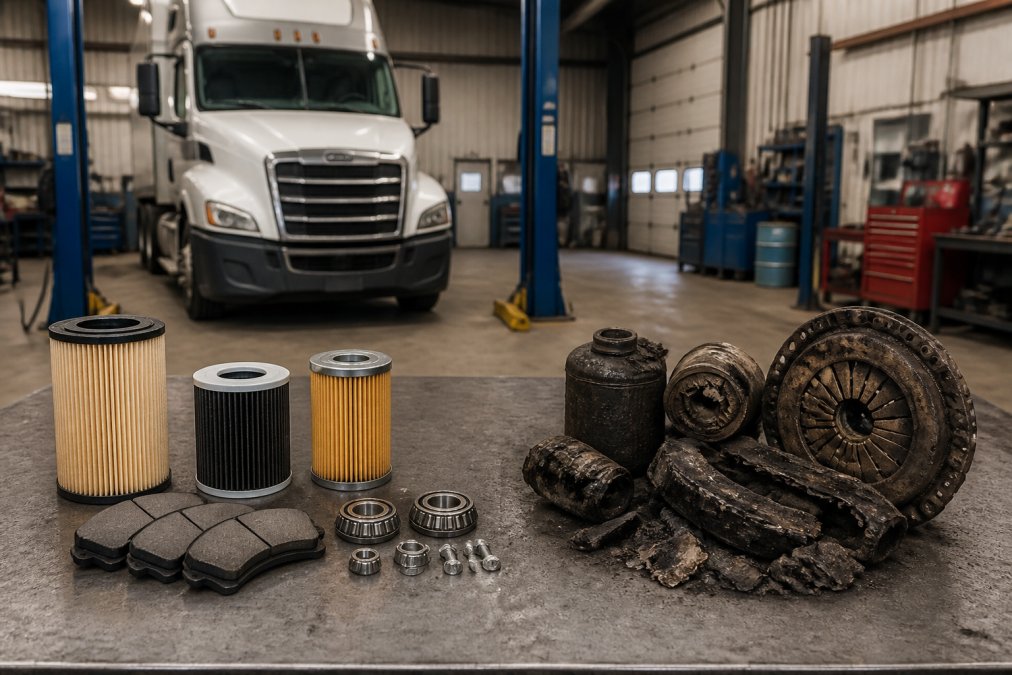
Preventive maintenance can reduce how often breakdowns happen. Contact us for details on fleet maintenance.
Coverage Gaps, Rural Performance, and Fleet Reporting Integrations
Coverage gaps are the quiet killer of fleet roadside programs. A provider can look strong on a coverage map and still struggle on rural interstates, remote distribution routes, and overnight hauls where the nearest qualified unit is far away.
Test the gaps before you commit:
- Name your three most remote regular routes and ask for response times there
- Ask whether rural calls carry a surcharge or a longer dispatch window
- Confirm the provider has heavy-duty units, not just light-duty tow trucks
Reporting is the other half of this. Fleets that manage breakdowns well track them. Ask whether the provider feeds data into your fleet management system, and whether you get per-vehicle breakdown history you can review with your maintenance partner.
Breakdowns will happen. What you control is how fast your fleet gets back on the road and how much each hour of downtime costs you.
Frequently Asked Questions
What should fleets look for in a truck roadside assistance provider?
Start with 24/7/365 dispatch and a written average response time you can hold the provider to. Confirm the provider handles heavy-duty commercial trucks, not just vans and box trucks. Ask how dispatch works: one call, or a chain of referrals. Check whether on-site repair, towing, tire service, and battery jump-starts are included or billed separately. Finally, request sample reporting and confirm how claims and exclusions are handled before you sign a contract.
How much does commercial truck roadside assistance cost?
Pricing depends on fleet size, vehicle types, coverage radius, and whether you choose a membership or pay-per-call model. Most providers quote per vehicle or per fleet rather than publishing rates. Visit our website for current pricing or a quote, and compare the total cost of ownership, not just the monthly fee. Factor in downtime, tow charges, and out-of-network fees, since a cheaper plan with slow dispatch can cost more per breakdown than a higher-priced plan with guaranteed response windows.
Are there 24 hour truck roadside assistance providers for fleets?
Yes. Several national providers advertise 24/7/365 dispatch, and some publish average response times. The key is verifying what happens at 2 AM on a weekend: who answers, how dispatch is triggered, and whether a mobile technician or tow is actually available in your area. Ask for the dispatch process in writing and test it with a non-emergency call before you rely on it for a live breakdown.
Does commercial truck roadside assistance cover towing?
Many plans include towing, but limits vary. Check the mileage allowance, whether heavy-duty recovery is covered, and whether the tow goes to your preferred shop or the provider's network shop. Some plans cover towing to the nearest qualified facility only. If your fleet runs heavy loads or specialized equipment, confirm recovery capability explicitly, because standard tow coverage may not include heavy-duty wreckers or off-road recovery.
What is the difference between roadside assistance and fleet maintenance?
Roadside assistance handles breakdowns and emergencies on the road: jump-starts, flat tires, fuel delivery, towing, and on-site repairs. Fleet maintenance is scheduled preventive work like DOT inspections, brake service, and diesel diagnostics that keeps trucks from breaking down in the first place. The two work best together. A maintenance program reduces breakdown frequency, while a roadside plan limits downtime when something fails anyway.