 Comparison
Preventive vs Reactive Truck Repair: True Cost Comparison
Table of Contents
- Preventive Maintenance vs Reactive Repair: The Core Difference
- The True Cost of Unplanned Truck Downtime
- Heavy Duty Truck Maintenance Pricing: Preventive Schedule vs Emergency Repairs
- Why Reactive Maintenance Costs More Over Time
- ROI and Asset Longevity: How Preventive Maintenance Protects Your Fleet
- When Reactive Maintenance Makes Sense
- Building a Preventive Maintenance Strategy for Your Operation
- Frequently Asked Questions
Last Updated: September 27, 2026
Preventive Maintenance vs Reactive Repair: The Core Difference
Preventive maintenance is scheduled, planned work performed on equipment before failure occurs. Reactive maintenance is emergency repair work triggered by equipment breakdown. Understanding preventive vs reactive maintenance matters because it fundamentally changes how you budget, plan, and operate.
Teams that shift from reactive to preventive approaches see dramatic improvements in operational reliability, the difference is keeping trucks running in the first place, not just fixing them faster.
Reactive repair feels cheaper initially, but hidden costs accumulate fast: unplanned downtime, emergency labor premiums, expedited parts shipping, and operational disruption. Preventive maintenance requires upfront investment in scheduled inspections and component replacement on a timeline, not a crisis.
The comparison of preventive vs reactive maintenance shows that preventive is built on asset criticality assessment and failure pattern analysis, while reactive maintenance is built on hope that nothing breaks at the worst possible time. The data clearly shows which strategy protects your fleet's asset longevity.
The True Cost of Unplanned Truck Downtime
When a truck fails on the road, you lose the vehicle, the load, delivery windows, customer relationships, and often face penalty clauses in contracts.
Emergency repairs carry multiple cost layers: labor spikes when technicians drop everything, expedited parts shipping adds premiums, after-hours breakdowns trigger dispatch surcharges, and roadside assistance becomes essential.
Operational expenses extend beyond repair costs. A lost truck for 48 hours means lost revenue, lost scheduling flexibility, missed deadlines, and cascading missed commitments across the entire operation.
Equipment maintained preventively develops predictable failure patterns, allowing you to schedule repairs during planned maintenance windows rather than emergencies.
Heavy Duty Truck Maintenance Pricing: Preventive Schedule vs Emergency Repairs
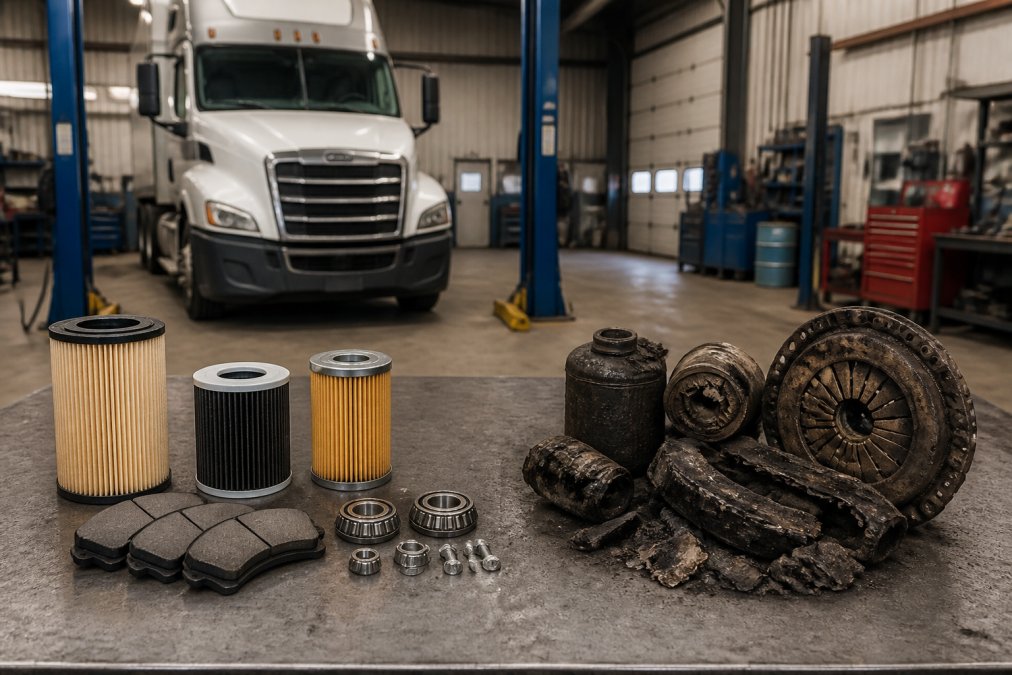
Preventive maintenance follows a structured schedule with measurable, predictable costs. For heavy-duty trucks, preventive maintenance involves scheduled services such as oil and filter changes, transmission fluid service, coolant flushes, brake inspections, and filter replacements. These services are performed at regular intervals to maintain vehicle performance and prevent unexpected breakdowns. The specific costs for these services depend on the type of truck, parts required, and labor involved. For detailed pricing, please contact Fairfield Truck Repair directly.
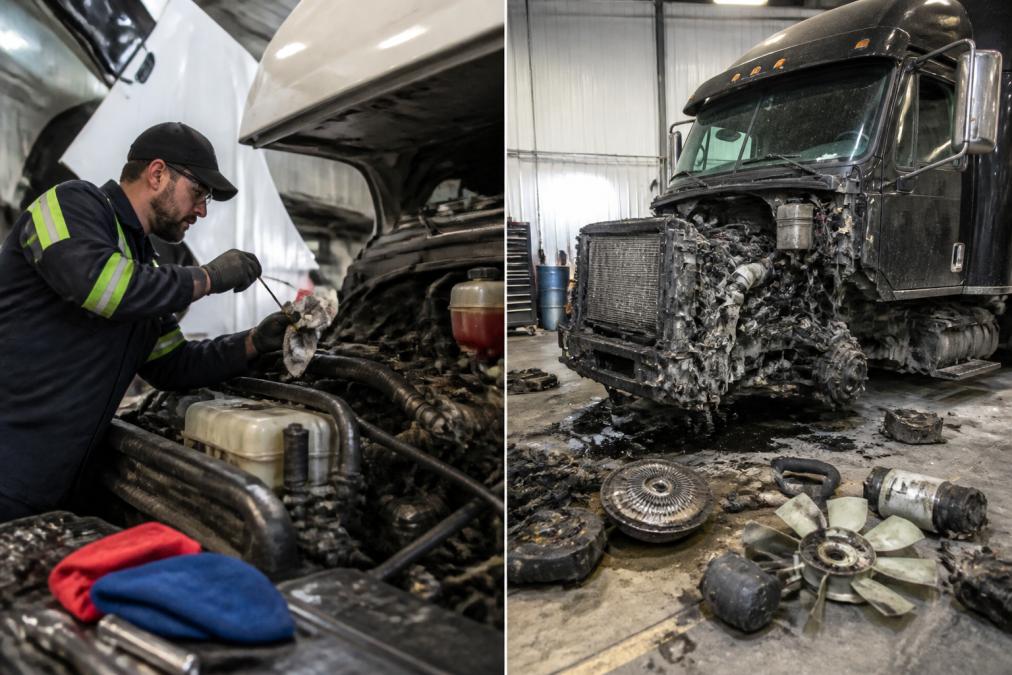
Emergency repairs carry multiple cost multipliers: labor rates can increase, expedited parts shipping costs more than standard, towing services may include after-hours surcharges, and diagnostic troubleshooting can require additional billable hours before repairs begin.
A catastrophic failure, such as a seized engine bearing, transmission failure, or complete engine overhaul, can be very costly. A single emergency transmission rebuild can often exceed the cost of an entire year of preventive maintenance for that vehicle.
A fleet of 10 heavy-duty trucks utilizing preventive maintenance typically experiences fewer emergency repairs annually compared to a reactive-only fleet, which faces a higher number of emergency repairs annually, leading to significantly higher costs plus lost revenue from downtime.
| Maintenance Type | Labor Rate | Parts Availability | Scheduling | Total Annual Cost (10-truck fleet) |
|---|---|---|---|---|
| Preventive (scheduled) | Standard ($85-$150/hr) | Planned, bulk ordering | Predictable | $45,000-$60,000 |
| Reactive (emergency) | Premium (1.5-2× standard) | Expedited shipping | Unpredictable | $60,000-$150,000+ |
Technicians performing scheduled preventive work follow checklists and batch similar tasks across vehicles efficiently. Emergency repairs require diagnostic troubleshooting and improvisation that can inflate billable hours.
Preventive maintenance enables volume purchasing and better parts pricing; reactive maintenance forces retail rates and emergency supplier markups.
Why Reactive Maintenance Costs More Over Time
Reactive maintenance creates compounding costs. Each emergency repair stresses surrounding components, a seized bearing creates vibration that damages adjacent equipment, a failed cooling system causes engine overheating that damages other systems. One breakdown triggers secondary failures.
Preventive maintenance extends asset longevity by addressing wear patterns before they cascade. Reactive maintenance shortens asset life by operating equipment in degraded states until failure forces action.
Deferred maintenance accelerates deterioration. Equipment running past its optimal maintenance window accumulates damage faster, what would cost $500 in preventive maintenance becomes a $3,000 emergency repair that damages other systems.
Technician efficiency suffers under reactive maintenance. Your service team troubleshoots emergencies instead of executing planned tasks. Planned work is efficient; emergency work requires diagnosis, parts sourcing, and improvisation that expand labor hours unpredictably.
Spare parts inventory management becomes chaotic under reactive maintenance, you either overstock or face expedited shipping costs. Preventive maintenance enables predictable ordering, reducing inventory carrying costs and emergency premiums.
ROI and Asset Longevity: How Preventive Maintenance Protects Your Fleet
ROI on preventive maintenance is calculated across the asset's full lifecycle. A truck maintained preventively might run 800,000-1,000,000 miles; a reactive truck becomes unreliable at 400,000-500,000 miles. Preventive maintenance extends asset life by 50-100%, directly reducing capital expenditure cycles.
Extended Asset Lifecycle and Capital Replacement Cycles
Extended lifecycle means fewer replacements. A new heavy-duty truck costs $120,000-$180,000. For a 50-truck fleet, preventive maintenance can mean 5-10 fewer truck purchases per decade, saving $600,000-$1,800,000 in capital expenditure.
Preventive maintenance requires training your technician team on inspection protocols and condition monitoring. Reactive maintenance often forces reliance on premium emergency contractors and external services, which can lead to a loss of institutional knowledge and increased burnout. Fleets heavily reliant on reactive maintenance may experience higher technician turnover. Shifting to preventive maintenance can lead to significant savings in reduced turnover over time.
Reliability-Centered Maintenance (RCM) identifies which components are critical, which failures are catastrophic, and which maintenance tasks prevent those failures. RCM typically finds that 20-30% of potential maintenance tasks actually prevent failures, allowing you to focus preventive spending on high-impact work.
Operational Efficiency and Revenue Impact
Operational efficiency improves measurably when equipment reliability increases. Trucks that run reliably are available for more loads, more routes, and more revenue-generating work. A fleet with high asset availability generates significantly more revenue per vehicle than a fleet managing constant breakdowns. The difference in billable days per year per truck between high-reliability and low-reliability fleets can lead to substantial lost revenue per truck annually, and even more for a larger fleet, due to preventive maintenance neglect.
That revenue improvement often exceeds the cost of preventive maintenance by 3-5×.
Environmental and Sustainability ROI
Preventive maintenance reduces environmental impact and aligns with ESG (Environmental, Social, Governance) goals increasingly tracked by fleet operators and their customers:
- Fuel efficiency: Well-maintained engines consume 5-10% less fuel than degraded engines. Over 100,000 miles, that's 500-1,000 gallons saved, reducing both costs and emissions.
- Waste reduction: Preventive maintenance replaces components before catastrophic failure, reducing scrap and waste. Reactive maintenance often results in complete component replacement when partial repair would have sufficed.
- Emissions compliance: Trucks maintained preventively pass emissions testing consistently. Reactive maintenance often results in vehicles operating in degraded states, increasing emissions output.
Fleet operators increasingly report that preventive maintenance programs can reduce their carbon footprint compared to reactive approaches, a metric now tracked by major customers and regulatory bodies.
Total Cost of Ownership (TCO) Calculation
The true cost of ownership must include the full picture:
Reactive approach: Purchase price ($140,000) + maintenance ($3,000/year × 6 years) + downtime costs ($50,000/year × 6 years) + emergency labor premiums ($20,000/year × 6 years) + replacement cycle (6 years) = $140,000 + $18,000 + $300,000 + $120,000 = $578,000 per truck over 6 years
Preventive approach: Purchase price ($140,000) + maintenance ($5,000/year × 10 years) + downtime costs ($8,000/year × 10 years) + standard labor rates ($0 premium) + extended replacement cycle (10 years) = $140,000 + $50,000 + $80,000 + $0 = $270,000 per truck over 10 years
Preventive maintenance reduces total cost of ownership by 40-50% while extending asset life and improving operational reliability. That ROI compounds across every vehicle in your fleet.
When Reactive Maintenance Makes Sense
Reactive maintenance isn't always wrong. For non-critical equipment with low failure consequence, reactive repair can be economically rational. A backup generator that rarely runs might not justify preventive maintenance. A rarely-used specialty tool might be cheaper to replace than maintain.
But for revenue-generating equipment, trucks that must deliver loads, equipment that directly impacts customer commitments, reactive maintenance is almost never the right choice. The cost of failure is too high.
There's also a transition reality: teams moving from pure reactive to preventive approaches often experience a period where both are happening simultaneously. You're still managing legacy reactive issues while implementing new preventive routines.
Building a Preventive Maintenance Strategy for Your Operation
Document your maintenance history. Every repair, every inspection, every component replacement should be logged. This data reveals patterns: which components fail repeatedly, which maintenance tasks actually prevent failures, which trucks are becoming unreliable. Use this data to refine your preventive maintenance strategy.
Frequently Asked Questions
What is the difference between preventive maintenance and reactive maintenance?
Preventive maintenance follows a scheduled plan: oil changes, filter replacements, and inspections happen on a fixed timeline or meter reading. Reactive maintenance waits for failure. You fix equipment only after it breaks down. Preventive stops problems before they start; reactive responds to emergencies. For heavy-duty trucks, preventive catches worn belts, degraded coolant, or fuel system issues before they strand your rig on the highway.
How does preventive maintenance reduce the cost of unplanned truck downtime?
Unplanned downtime halts revenue immediately. A broken transmission on I-80 at 2 AM means towing, emergency labor, expedited parts, and lost loads. Preventive maintenance catches wear patterns early, so you schedule repairs during planned downtime when costs are lower and you control the timeline. You avoid emergency labor rates, expedited shipping fees, and the production loss from unexpected fleet unavailability.
What are the hidden costs of reactive truck repairs?
Beyond the repair bill itself: emergency labor costs can be higher than standard rates. Expedited parts shipping adds to the cost. Towing and roadside assistance fees accumulate fast. Your truck sits idle, losing revenue. Other equipment may fail while one unit is down, cascading costs. Over a year, these hidden expenses often exceed the cost of a preventive maintenance program.
How can I calculate the ROI of a preventive maintenance program for my fleet?
Start with your annual emergency repair costs and downtime losses. Compare that total against the cost of a preventive schedule. Track mean time between failures before and after implementation. Most fleets see a significant reduction in emergency repairs within 12 months. Calculate spare parts inventory savings and technician utilization gains. Contact Fairfield Truck Repair for a fleet-specific ROI analysis based on your equipment and operational patterns.