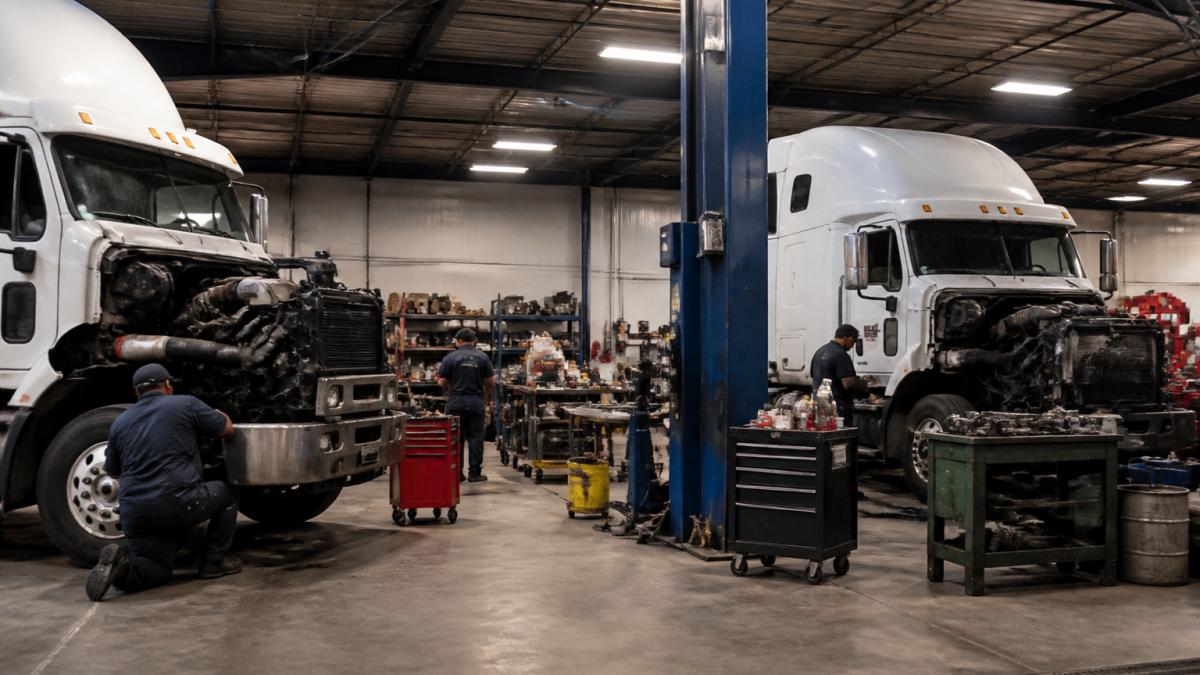
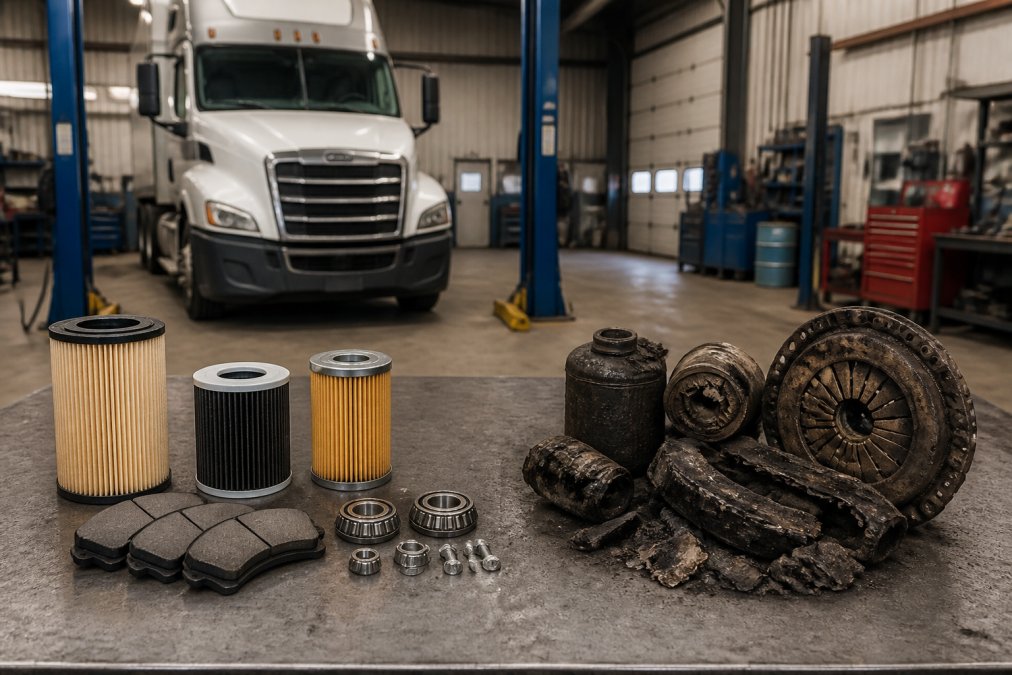
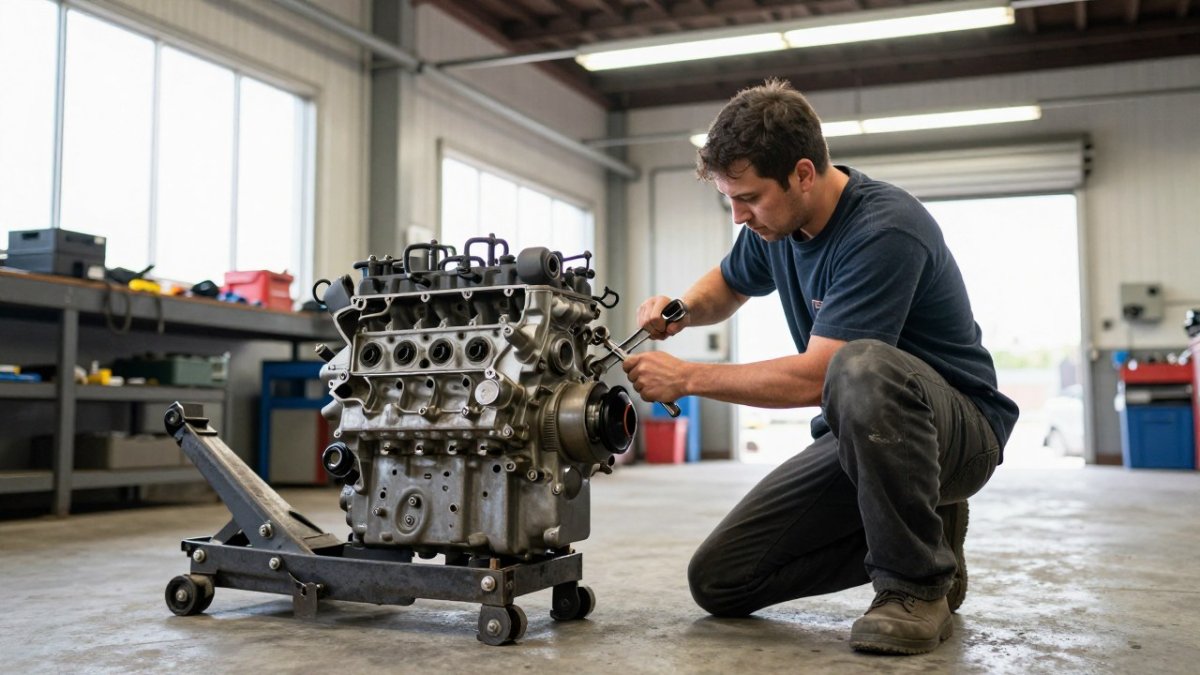
 Comparison
Heavy Duty Diesel Parts and Repair: What Fleet Managers Should Compare
Last Updated: November 17, 2026
Quick Summary
Heavy duty diesel parts and repair combines quality components with correct diagnosis to keep a commercial truck earning instead of sitting. Judge a shop on whether the diesel parts it installs hold up and whether its technicians find the real fault before touching a wrench, since many breakdowns trace back to a shop that guessed.
- Ask whether the warranty covers the part only or the part and the labor to replace it.
- Confirm fitment against the VIN before ordering, and cross-reference the part number against the engine serial number.
- A clogged filter or failed sensor can derate the engine, so aftertreatment inspection belongs in any preventive program.
- A shop that only reads codes is reading a symptom; real diagnostics means watching sensor values, fuel pressure, and injector performance under load.
- Some fleets keep two relationships: a full-service shop for planned work and a mobile provider for emergencies.
Table of Contents
- What a Heavy Duty Diesel Parts and Repair Shop Should Deliver
- Comparing Repair Providers: What Separates a Good Shop From a Parts Swapper
- Diesel Engine Diagnostics: How to Tell Whether a Shop Actually Diagnoses
- Parts Sourcing, Warranties, and Compatibility for Heavy Duty Diesel Parts
- Diesel Exhaust Aftertreatment System Maintenance: The Repair Most Shops Miss
- Your Fleet Maintenance Checklist for Keeping Trucks on the Road
- Heavy-Duty Truck Roadside Assistance: What to Expect at 2 AM
- Book a Diagnostic Appointment With Fairfield Truck Repair
- Frequently Asked Questions
What a Heavy Duty Diesel Parts and Repair Shop Should Deliver
Heavy duty diesel parts and repair is the combination of quality components and correct diagnosis that keeps a commercial truck earning instead of sitting.
The work itself splits into clear categories: engine repair and engine service, transmission repair, brake service, suspension repair, and diesel exhaust aftertreatment work. A full-service repair business should also stock or source quality parts, not just labor.
Capabilities Checklist for Vetting a Diesel Repair Shop
Use this list before you hand over a truck. It works for one unit or a whole fleet.
-
Can the shop show diesel engine diagnostics equipment, not just a code reader?
-
Do they explain the fault before quoting the repair?
-
Do they handle tractor-trailer work, or only light trucks?
-
Is there a written estimate with parts and labor separated?
-
Can they service aftertreatment systems, not just engine and brakes?
If a shop stumbles on the first two, walk away.
Comparing Repair Providers: What Separates a Good Shop From a Parts Swapper
The clearest difference between providers is how they approach a repair. A parts swapper replaces components until the symptom stops. A diagnostic shop identifies the failed part, confirms why it failed, and checks whether the cause will damage the replacement. Ask about their process, not just their prices.
| Provider Type | Strength | Weakness | Best For |
|---|---|---|---|
| Full-service diesel shop | Diagnostics, engine, transmission, brakes, aftertreatment | May book out during peak season | Fleets wanting one partner |
| Parts-only supplier | Wide parts catalog, fast shipping | No installation or diagnosis | Shops sourcing their own parts |
| Mobile repair unit | Comes to your yard | Limited to jobs a truck can do on site | Roadside and minor fixes |
| General automotive shop | Convenient | Light-duty focus, limited diesel tooling | Small vans, not heavy trucks |
Match the Provider to the Truck, the Job, and the Fleet Size
The table above tells you what each provider type is good at. The harder question is which one fits your situation. Use these three filters before you call.
- Truck type and engine. A Class 8 tractor with an aftertreatment fault needs a shop with the diagnostic software and tooling for that engine family. A medium-duty box truck may be well served by a general shop, until the fault lands in the emissions system.
- Repair urgency. A derated truck on the shoulder is a roadside or mobile job. A scheduled clutch replacement is a shop job you can plan around. Do not ask a mobile unit to do a teardown, and do not tow a truck for a fault a mobile technician could clear on site.
- Fleet size. A single owner-operator values availability and a clear estimate. A fleet of twenty or more needs a provider that can schedule recurring preventive work, hold parts for your common failures, and report on what was done across units.
Some fleets end up with two relationships: a full-service shop for planned and major work, and a mobile or roadside provider for emergencies.
How to Compare Written Estimates Line by Line
An estimate is only useful if you can compare it to another one. Ask every provider for a written estimate that separates parts and labor, and read it in this order:
- Diagnostic fee. Is diagnosis a separate paid step, or is it folded into the repair? A shop that diagnoses first and quotes second is showing you its process.
- Parts line. Is the part OEM, aftermarket, or remanufactured, and what warranty covers it? An estimate that lists a price without a part type is not comparable.
- Labor line. Are hours and rate stated separately? Flat-rate and hourly estimates are both fine, but you cannot compare them if the estimate hides one inside the other.
- Related damage. Does the estimate include components the failure may have damaged, or will those appear later as a change order?
- What could push it higher. Ask the shop to name the conditions that would raise the number, a cracked core, a seized fastener, a second failed sensor. A shop that can name them has seen the job before.
Questions to Ask Before Approving a Repair
- What failed, and what caused it to fail?
- Will you show me the old part?
- Is this an OEM part or aftermarket, and what warranty covers it?
A shop that answers all five without hedging is one you can build a program around. A shop that deflects on the first two is telling you how the next repair will go.
Diesel Engine Diagnostics: How to Tell Whether a Shop Actually Diagnoses
Diesel engine diagnostics is the process of using live engine data, fault codes, and physical inspection to find the root cause of a fault rather than its symptom. A shop that only reads codes is reading a symptom.
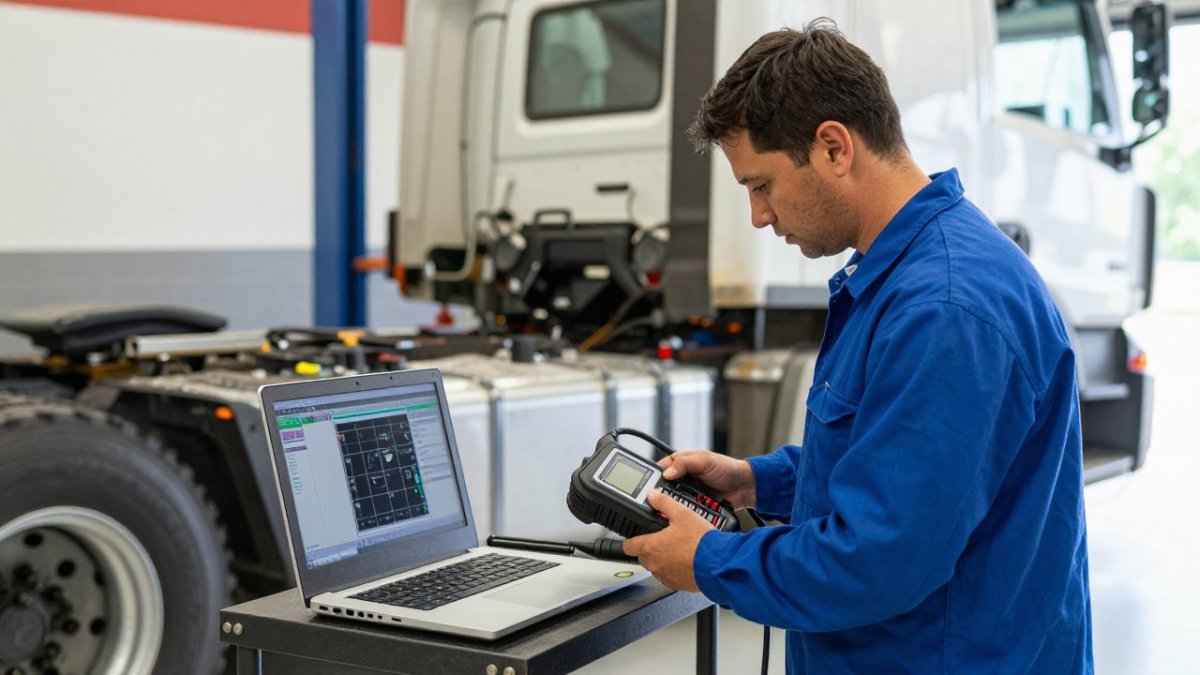
The tell is simple. Ask the technician to explain what the data showed and what they ruled out. If they can walk you through it, they diagnosed.
Diagnostics is a step to ask about up front when comparing providers. If you want the deeper fleet-side view of this process, read our guide on diesel engine diagnostics for fleet trucks. When you are ready to have it done properly, you can book diesel engine diagnostics with a shop that starts there.
Parts Sourcing, Warranties, and Compatibility for Heavy Duty Diesel Parts
Diesel parts decisions come down to three questions: does it fit, who backs it, and how fast can you get it. Compatibility is the one that bites. The same engine family can carry different components across model years, so a part number that fits one truck may not fit the next in your fleet. A guide that only lists suppliers skips the part that actually protects your money.
OEM, Aftermarket, and Remanufactured: What You Are Actually Buying
Every heavy-duty part falls into one of three buckets, and the right choice depends on the truck, the job, and how long you plan to keep the unit.
| Part Type | What It Is | Strength | Trade-off | Best For |
|---|---|---|---|---|
| OEM (original equipment manufacturer) | Built to the manufacturer's specification, often sold through the dealer network | Exact fit, factory warranty terms, predictable performance | Highest price, dealer lead times can stall a repair | Warranty-sensitive repairs, newer trucks, emissions components |
| Aftermarket | Produced by a third-party manufacturer to fit the same application | Lower price, broad availability, many quality tiers | Quality varies widely by brand; fitment and warranty depend on the supplier | High-mileage trucks, non-critical components, fleets watching cost per mile |
| Remanufactured | A used core fully torn down, inspected, and rebuilt to spec | Lower cost than new, often carries its own warranty, keeps a core in circulation | Requires a good core; warranty terms vary by rebuilder | Engine components, injectors, turbochargers, starters and alternators |
A common pattern is that fleets run OEM on emissions and safety-critical parts and aftermarket or reman on wear items, then revisit the mix as trucks age. There is no universal answer, but there is a wrong one: choosing on price alone without knowing which bucket the part came from.
Fitment: Verify Against the VIN, Not the Model Year
Fitment is where most parts mistakes start. Two trucks that look identical can carry different engine calibrations, different aftertreatment configurations, or a mid-year running change that swaps a sensor or a bracket.
Watch out: a part that bolts on but does not match the calibration can trigger a fault code or a derate, and the supplier may treat an installed electrical part as non-returnable.
Warranty Terms: Read the Labor Line
The warranty question that matters is not how long it lasts but what it covers. Ask whether the warranty covers the part only or the part and the labor to replace it.
Reputable suppliers such as FleetPride's heavy-duty parts catalog publish fitment guidance, and rebuild suppliers like Heavy Duty Pros engine kits list the engine makes they cover. Use those listings as a starting point, then confirm the specifics against your VIN and your written estimate before you approve the order.
Diesel Exhaust Aftertreatment System Maintenance: The Repair Most Shops Miss
Diesel exhaust aftertreatment system maintenance covers the components that clean the exhaust: the diesel particulate filter, the selective catalytic reduction system, and the sensors that monitor them. A check-engine light from this system is sometimes mistaken for an engine fault.
A clogged filter or a failed sensor can derate the engine, and a derated truck is a truck that is not earning. Regular inspection of these components belongs in any preventive program.
Your Fleet Maintenance Checklist for Keeping Trucks on the Road
Fleet maintenance is the scheduled work that keeps commercial vehicles out of the breakdown column. A written checklist beats memory every time.
- Engine oil and filter service on schedule
- Brake inspection, including air system and slack adjusters
- Tire pressure, tread depth, and rotation
The argument for a program over reactive repair is straightforward: planned work happens on your schedule, and unplanned work happens on the highway. A fleet maintenance service built around that idea is available, with preventive truck care scheduled around your operation.
Heavy-Duty Truck Roadside Assistance: What to Expect at 2 AM
Heavy-duty truck roadside assistance is emergency repair and recovery for a commercial vehicle that has broken down away from the yard.
Expect to give the dispatcher your location, the truck and trailer details, and the symptom.
Watch out: a provider that promises a fixed arrival time without knowing the fault is guessing. Response depends on the job and the technician's load.
Book a Diagnostic Appointment With Fairfield Truck Repair
The gap between a fleet that runs and one that limps comes down to who does the work. Fairfield Truck Repair offers heavy-duty truck repair, diesel diagnostics, fleet maintenance, and roadside service.
Whether you run four trucks or forty, the aim is to find the fault once rather than replace parts twice. Contact Fairfield Truck Repair to discuss maintenance scheduling for your operation. Visit our heavy duty truck repair page to request a diagnostic appointment or a quote.
If your trucks are losing hours to repeat repairs, the fix starts with a real diagnosis. Fairfield Truck Repair brings specialized diesel diagnostics, comprehensive fleet maintenance, and roadside service to keep commercial vehicles road-ready and downtime to a minimum.
Frequently Asked Questions
What services does a heavy duty diesel parts and repair shop provide?
A full-service shop can cover engine repair and service, transmission repair, brake service, suspension repair, and diagnostics. Some providers also offer mobile repair, roadside assistance, and fleet maintenance programs. Before you commit, confirm the shop handles your engine make and has the diagnostic equipment for aftertreatment systems, since those repairs are where many general shops fall short.
How do I choose a heavy duty diesel repair shop for my fleet?
Start with a capabilities checklist: ASE-certified technicians, diagnostic software for your engine brands, a clear estimate process, and parts warranties in writing. Ask how they handle emergency repair and whether they offer scheduled fleet maintenance. Compare at least two providers on response time, parts sourcing, and how they document diagnostics. A shop that explains its diagnostic process before quoting repairs is usually the safer bet.
What parts commonly need replacement on heavy-duty diesel trucks?
Filters, belts, hoses, brake components, and suspension parts wear on a predictable schedule. Higher-cost items include injectors, turbochargers, and aftertreatment components like DPFs and sensors. Rebuild kits for Cummins, Caterpillar, Detroit Diesel, and similar makes are widely available from suppliers such as Heavy Duty Pros and FleetPride. Matching part numbers to your engine serial number prevents compatibility problems and warranty disputes.
Can a repair shop diagnose diesel exhaust aftertreatment problems?
Yes, if the shop has the right scan tools and training. Aftertreatment faults often show up as derate events, frequent regenerations, or check-engine lights. A proper diagnosis reads fault codes, checks sensor data, and inspects the DPF and DEF system rather than replacing parts on guesswork. Ask the shop to explain what tests they run before quoting a repair, and get the diagnostic findings in writing.
How often should a heavy-duty diesel truck be serviced?
Follow the engine manufacturer's interval for oil and filter changes, typically based on mileage or engine hours, and inspect brakes, tires, and aftertreatment components at every service. Fleets running 24/7 on short-haul routes often need shorter intervals than long-haul trucks. A written fleet maintenance checklist tied to each unit's odometer keeps preventive work from slipping and helps you catch small repairs before they become roadside breakdowns.