 How-to
What Is Included in a DOT Inspection: A Complete Guide
Last Updated: November 12, 2026
Quick Summary
A DOT inspection is a formal roadside or facility check of a commercial motor vehicle and its driver, run to confirm both meet federal safety rules. It covers driver credentials, paperwork, brakes, tires, lights, steering, suspension, cargo securement, and other safety equipment. Inspectors can pull a truck out of service on the spot if they find critical defects.
- Level 1 is the most thorough roadside inspection, checking the driver and the full vehicle including the undercarriage.
- A clean Level 1 usually takes 30 to 60 minutes, longer if a defect needs a closer look.
- Brakes and tires cause the most out-of-service findings during inspections.
- An out-of-service truck cannot be driven away and needs repair or towing before it moves.
- Run a daily pre-trip inspection and a full monthly audit to keep trucks inspection-ready.
Table of Contents
- What a DOT Inspection Covers and Why It Happens
- The Level 1 2 3 DOT Inspection Framework Explained
- Your Level 1 DOT Inspection Checklist: The Six-Step Walkthrough
- The Complete DOT Inspection Checklist for Fleet Managers
- Out-of-Service Violations and How to Correct Defects
- Scheduling Your Next DOT Inspection with Fairfield Truck Repair
- Frequently Asked Questions
What a DOT Inspection Covers and Why It Happens
A DOT inspection is a formal roadside or facility check of a commercial motor vehicle and its driver, run to confirm both meet federal safety rules. It covers driver credentials, paperwork, brakes, tires, lights, steering, suspension, cargo securement, and other safety equipment. Inspectors can pull a truck out of service on the spot if they find critical defects.
The question fleet managers ask most is simple: what actually gets looked at? Below, we break down every level, every component, and what happens when something fails. The 6-step walkthrough later in this guide mirrors the order a qualified inspector typically follows.
Why does it matter? A failed inspection costs you a truck, a driver, and a delivery window.
The Regulatory Backbone: Federal DOT Inspection Requirements
Federal rules set the floor for every inspection. The Federal Motor Carrier Safety Administration sets the standards inspectors apply, and its North American Standard Inspection program defines what gets checked at each level. Carriers must also keep an annual inspection on file for each vehicle, documented on a report the inspector signs.
Two things catch people out. First, the annual inspection is not the same as a roadside inspection, though both use similar criteria. Second, the driver is inspected too, not just the truck. Credentials, hours-of-service records, and medical certification all fall inside the scope.
The Level 1 2 3 DOT Inspection Framework Explained
Inspection levels differ by how much of the truck and driver gets examined, and the level number tells you the scope before the officer even walks up. The North American Standard Inspection program defines the levels; the ones a driver is most likely to meet are Levels 1, 2, and 3, with Levels 4 and 5 used in narrower circumstances.
| Level | Scope | Driver Checked | Under-Carriage | Typical Setting |
|---|---|---|---|---|
| Level 1 | Full vehicle + driver | Yes | Yes | Roadside, weigh station |
| Level 2 | Walk-around + driver | Yes | No | Roadside |
| Level 3 | Driver credentials only | Yes | No | Roadside, terminal |
| Level 4 | Special one-time check | Varies | Varies | Targeted study |
| Level 5 | Full vehicle at terminal | Yes | Yes | Carrier facility |
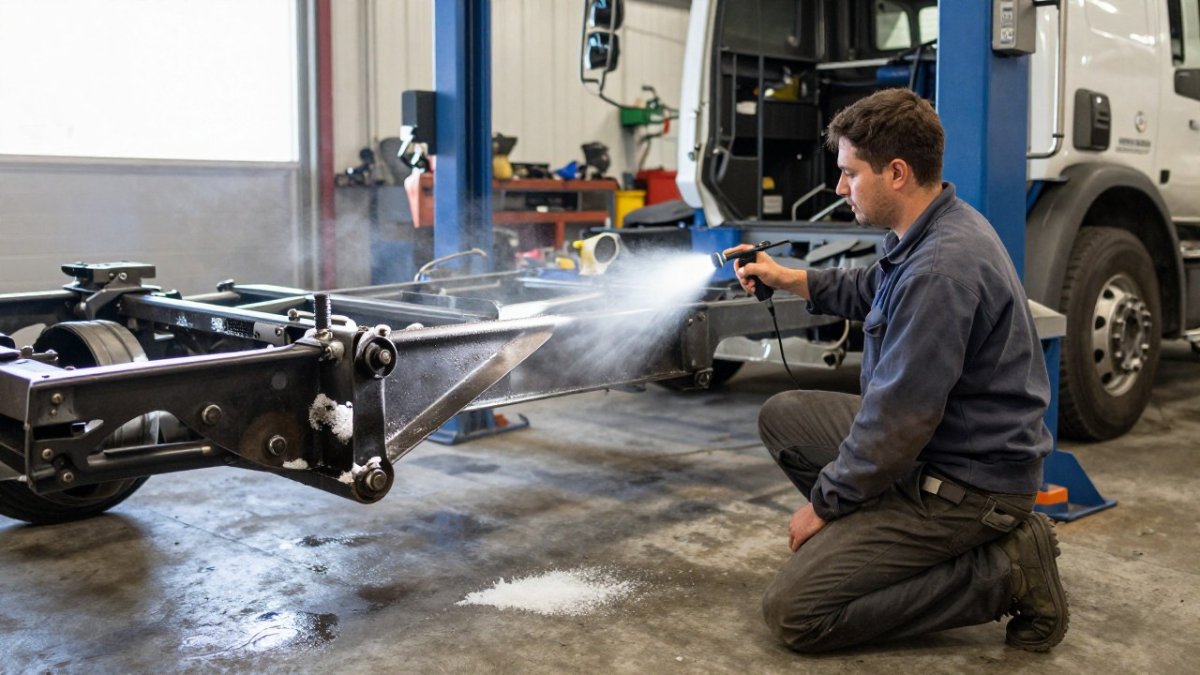
Level 1 is the most thorough roadside inspection. The officer checks the driver's credentials and records, then examines the vehicle from the front bumper around and under the truck, including brake components, steering linkage, suspension, exhaust, frame, and the undercarriage. A clean Level 1 is the inspection most carriers prepare for because it touches nearly every system on the vehicle.
Level 2 is a walk-around inspection. The officer checks the driver and inspects the vehicle from ground level without going underneath. Brakes, tires, lights, and cargo securement are still in scope, but components that require a crawl under the truck, such as some brake adjustment checks and frame areas, are not examined the same way.
Level 3 is a driver-only inspection. The officer reviews credentials, medical certification, hours-of-service records, and vehicle documents. No mechanical inspection of the truck occurs, but a driver-side violation can still take the driver out of service.
Level 4 is a special inspection of a specific item, often run as a one-time targeted study rather than a routine roadside check. Scope varies with what is being examined.
Level 5 repeats the Level 1 vehicle scope but happens at the carrier's terminal rather than the roadside. It is the inspection most often tied to a carrier's own compliance review.
A Level 3 does not mean the truck is exempt. If the officer sees an obvious defect during the credential check, the driver can still be placed out of service for a paperwork or hours violation.
Your Level 1 DOT Inspection Checklist: The Six-Step Walkthrough
The Level 1 DOT inspection checklist follows a set sequence. An inspector starts with the driver, works around the vehicle, then goes underneath. Timing varies, but a clean Level 1 usually takes 30 to 60 minutes. A defect that needs a closer look stretches that out.
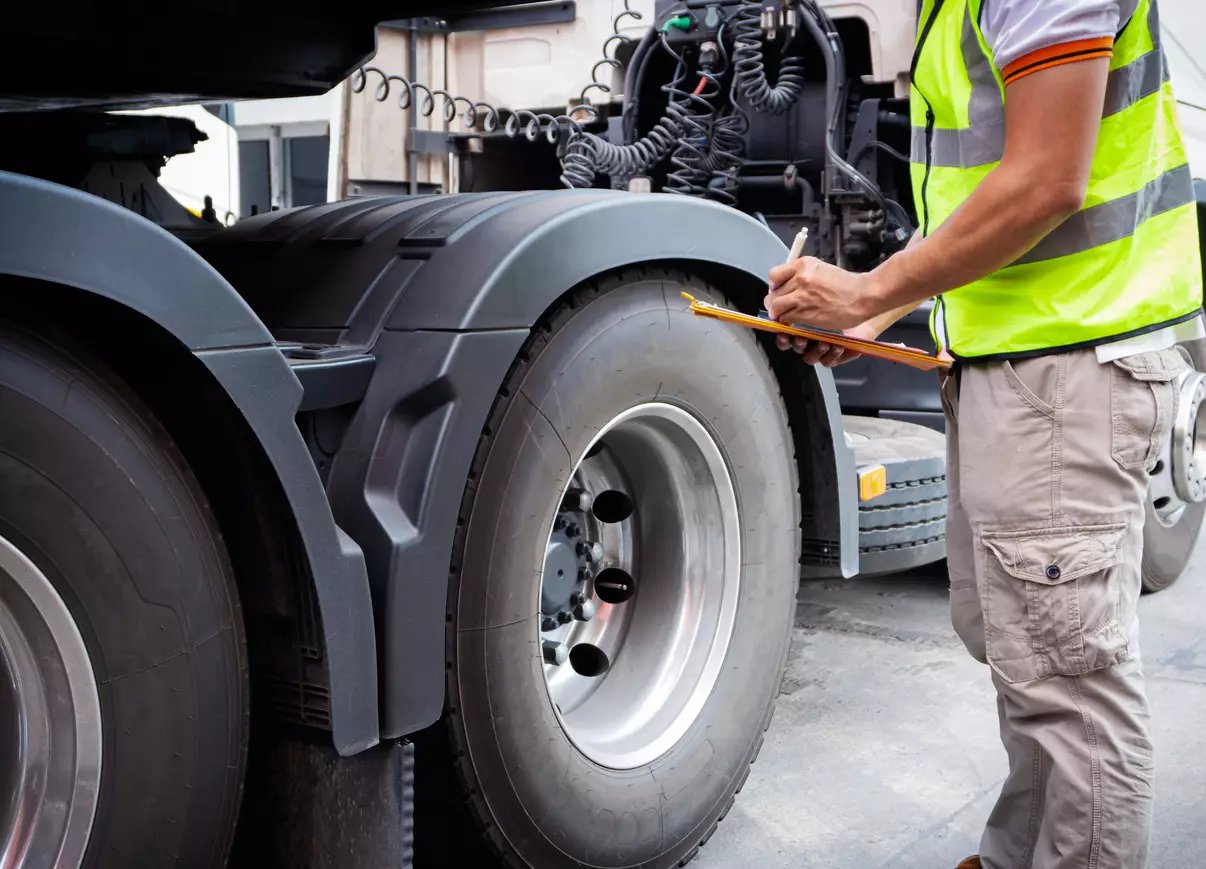
Here is how the walkthrough runs, step by step.
Step 1: Driver Credentials and Vehicle Documents
The inspector begins with paperwork. Have these ready before the truck rolls:
- Commercial driver's license, valid and correct class
- Medical examiner's certificate
- Hours-of-service records for the current day and prior 7 days
- Vehicle registration
- Insurance card
- Annual inspection report
- Shipping papers or bill of lading
A missing document is a violation, even if the truck is perfect. Keep a document folder in every cab.
Step 2: Brakes, Tires, and the Out-of-Service Criteria
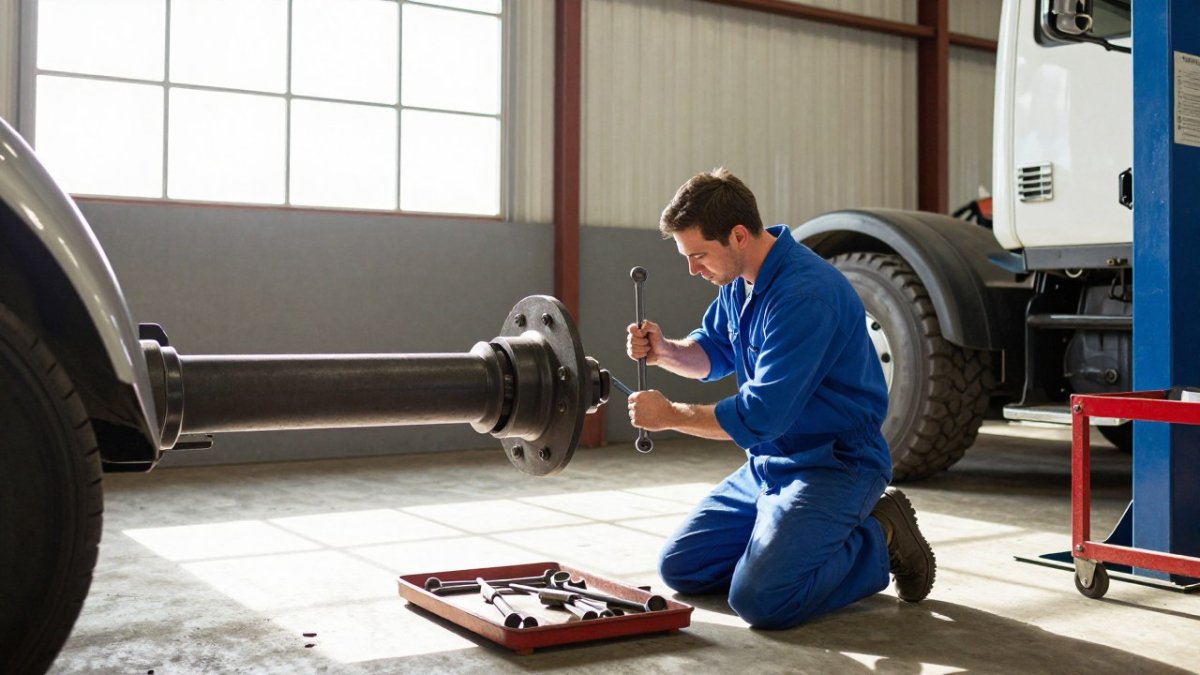
Brakes and tires cause the most out-of-service findings. Inspectors check brake components, pushrod travel, air leaks, and warning systems. On tires, they measure tread depth and look for cuts, bulges, and exposed cords. Wheels, rims, hubs, and lug nuts get checked for cracks and missing hardware.
Watch out: a brake defect that pushes a truck out of service cannot be driven away. It needs repair before the vehicle moves. If your brakes fail inspection, our brake repair service handles heavy-duty fixes, and our article on whether regular commercial truck brake inspections are worth it explains the maintenance case in more depth.
Step 3: Lights, Steering, Suspension, and Cargo Securement
Next comes the walk-around. Inspectors check lighting devices, reflectors, and electrical systems, including turn signals, brake lights, and clearance lamps. Steering mechanisms and suspension parts get a close look for play, cracks, and leaks. Cargo securement, seat belts, windshield, mirrors, and wipers round out the check.
Steering and suspension defects are common out-of-service items. If yours get flagged, our suspension and steering service covers the repair.
The Complete DOT Inspection Checklist for Fleet Managers
A DOT inspection checklist for fleet managers should live in your maintenance system, not a desk drawer. The goal is simple: no truck leaves the yard with a defect an inspector would catch. Run a pre-trip inspection every day, and a full audit monthly.
- Daily pre-trip: lights, tires, brakes, fluids, leaks
- Weekly: brake adjustment check, tire pressure, lug nuts
- Monthly: full walk-around audit against inspection criteria
- Quarterly: undercarriage and suspension review
- Annually: documented periodic inspection on file
- Always: driver credential and document audit
Fleet managers who want the ongoing program rather than the one-off fix should look at our fleet maintenance service. It keeps trucks inspection-ready between checks.
Out-of-Service Violations and How to Correct Defects
An out-of-service violation means the truck, the driver, or both cannot legally continue until the defect is corrected. The officer applies out-of-service criteria to the systems most likely to cause a crash, and the driver receives a report listing each violation found. The distinction that matters: a violation is a defect noted on the report, while an out-of-service condition is a defect severe enough to stop the vehicle or driver on the spot.
High-impact items that commonly trigger an out-of-service order include:
- Brakes: pushrod stroke beyond the adjustment limit, air leaks that exceed the allowable rate, and inoperative emergency or parking brakes.
- Tires: tread depth below the minimum, exposed cords, bulges, and sidewall cuts.
- Wheels and rims: cracked rims, missing or loose lug nuts, and damaged hubs.
- Lights: inoperative headlamps, brake lights, turn signals, and required clearance lamps.
- Steering and suspension: excessive play in steering components, cracked or broken suspension parts, and leaking shock absorbers.
- Cargo securement: unsecured loads and failed tiedowns.
- Driver-side items: expired medical certification, hours-of-service violations, and missing or invalid credentials.
Correcting defects follows a clear path:
- Read the inspection report and list every violation, separating out-of-service items from non-critical ones.
- Repair critical defects before the vehicle moves. An out-of-service truck cannot be driven away; it needs repair or towing.
- Document the repair with parts and labor details, including the date and the technician who performed the work.
- Re-inspect the repaired system before the truck returns to service.
- File the report and track repeat issues by truck and by driver.
Watch out: an out-of-service order is not cleared by the repair alone. The carrier generally must document the correction and, depending on the violation, may need to show the repair record before the vehicle is placed back in service. Keep the inspection report, the repair invoice, and the re-inspection record together so the paper trail is complete if the vehicle is stopped again.
What most guides miss is the pattern behind repeat violations. A truck that fails the same check twice usually has a maintenance process problem, not a parts problem. Reviewing reports by truck and by system shows whether the issue is a single bad component or a schedule that lets defects recur.
Scheduling Your Next DOT Inspection with Fairfield Truck Repair
Book your next inspection before the current one expires, not after a roadside stop forces the issue. You can schedule a DOT inspection at our shop.
We also handle heavy-duty repairs, specialized diesel diagnostics, and roadside service when a truck breaks down mid-route.
A failed inspection stalls a truck, a driver, and a delivery. Fairfield Truck Repair keeps fleets moving with thorough DOT inspections, expert heavy-duty repairs, and diesel diagnostics that find the real problem. Get started with Fairfield Truck Repair and keep every truck road-ready.
Frequently Asked Questions
What will fail a DOT inspection?
A vehicle fails when an inspector finds a defect that meets the out-of-service criteria. Common failures include brake components below the adjustment limit, tire tread depth under 4/32 of an inch on front tires, cracked or broken wheels and rims, inoperative lights or reflectors, loose lug nuts, and steering or suspension parts with visible damage. Driver-side failures, such as an expired medical card or missing registration, can also put the vehicle out of service until the paperwork is corrected.
What documents do I need for a DOT inspection?
Drivers should carry a valid commercial driver's license, a current medical examiner's certificate, vehicle registration, and proof of insurance. The inspector also checks the annual inspection report and may review the driver's record of duty status. Keeping these documents organized in a single folder speeds up the driver-side portion of the inspection and prevents a paperwork violation from sidelining an otherwise roadworthy truck.
What is checked during a Level 1 DOT inspection?
A Level 1 inspection is the most thorough level and covers both the driver and the vehicle. The inspector reviews credentials and documents, then checks brake systems, tires, wheels, rims, hubs, lighting devices, reflectors, steering mechanisms, suspension, fuel and exhaust systems, the frame, cargo securement, seat belts, windshield, mirrors, and wipers. Any defect that meets the out-of-service criteria must be repaired before the vehicle returns to service.
How long does a DOT inspection take?
A Level 1 inspection typically takes 45 to 60 minutes when the vehicle is clean and the paperwork is in order. Levels 2 and 3 run shorter because they skip the full under-hood and underneath checks. Missing documents, heavy road grime, or a defect that requires a second look can extend the time. Scheduling inspections during planned downtime keeps a routine check from turning into an unplanned roadside stop.