 Listicle
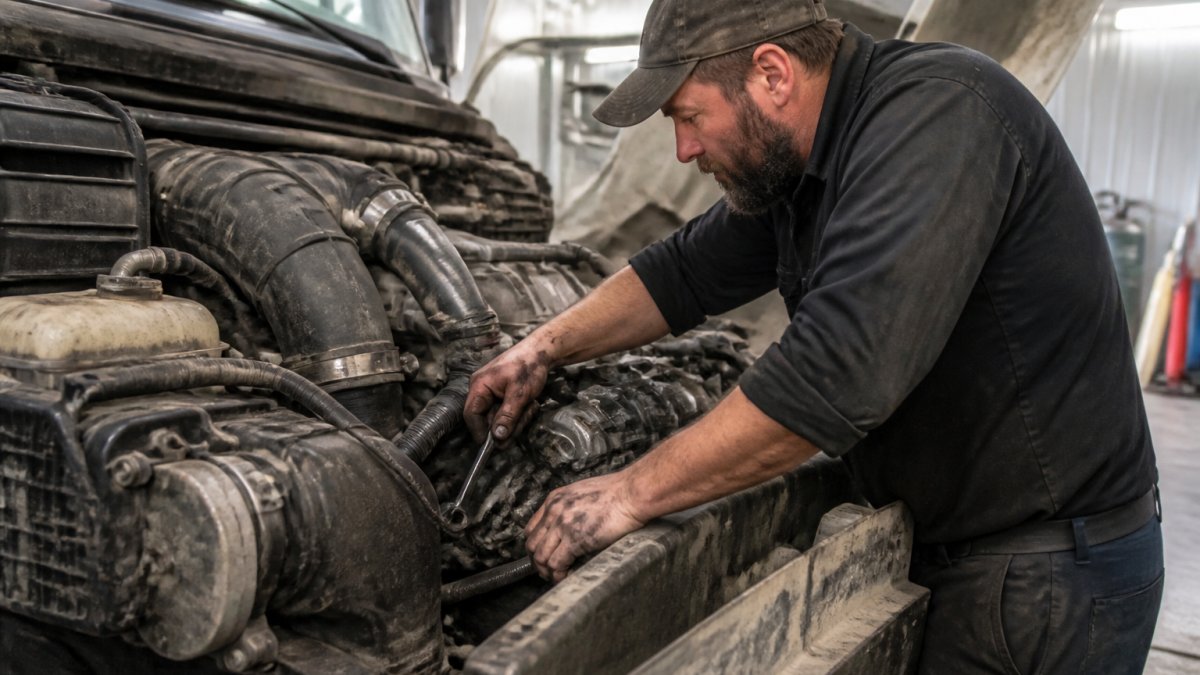
Are Regular Commercial Truck Brake Inspections Worth It?
Last Updated: November 7, 2026
Quick Summary
Regular truck brake inspections catch wear and defects early, while they are still a maintenance item rather than a breakdown, which reduces roadside out-of-service events, repair costs, and idle trucks. Drivers should check brakes before and after each trip, and a qualified technician should inspect them at every preventive maintenance interval.
- Brake defects are among the most common reasons commercial vehicles are placed out of service at roadside inspections.
- Drivers should test air pressure buildup, check brake lines, and confirm slack adjusters move freely before each trip.
- On the lift, technicians measure lining thickness, drum condition, pushrod travel, and brake chamber condition.
- A common PM starting point is a 25,000-mile range for long-haul tractors, with brake checks folded in.
- Medium-duty and short-haul units often use a shorter PM interval of 10,000 to 15,000 miles.
Table of Contents
- Why Brake Safety Decides Whether Your Trucks Stay on the Road
- The Commercial Truck Brake Inspection Checklist
- Air Brake Inspection for Trucks: Components and Failure Symptoms
- Truck Brake Warning Signs Drivers Should Never Ignore
- Building an Inspection Schedule Around Mileage, Duty Cycle, and Conditions
- How to Reduce Truck Downtime With Maintenance and Inspection Records
- Set Up a Recurring Brake Inspection Program for Your Fleet
- Frequently Asked Questions
Why Brake Safety Decides Whether Your Trucks Stay on the Road
The benefits of regular commercial truck brake inspections come down to one fact: brakes are the only system on a loaded tractor-trailer that can stop it.
Brakes are a critical inspection item for good reason.
That distinction matters. A worn brake shoe caught at the shop is a scheduled repair.
The Commercial Truck Brake Inspection Checklist
A good checklist separates what a driver can see and feel from what requires a lift and tools. Skipping either half leaves gaps.
Pre-Trip and Post-Trip Driver Checks
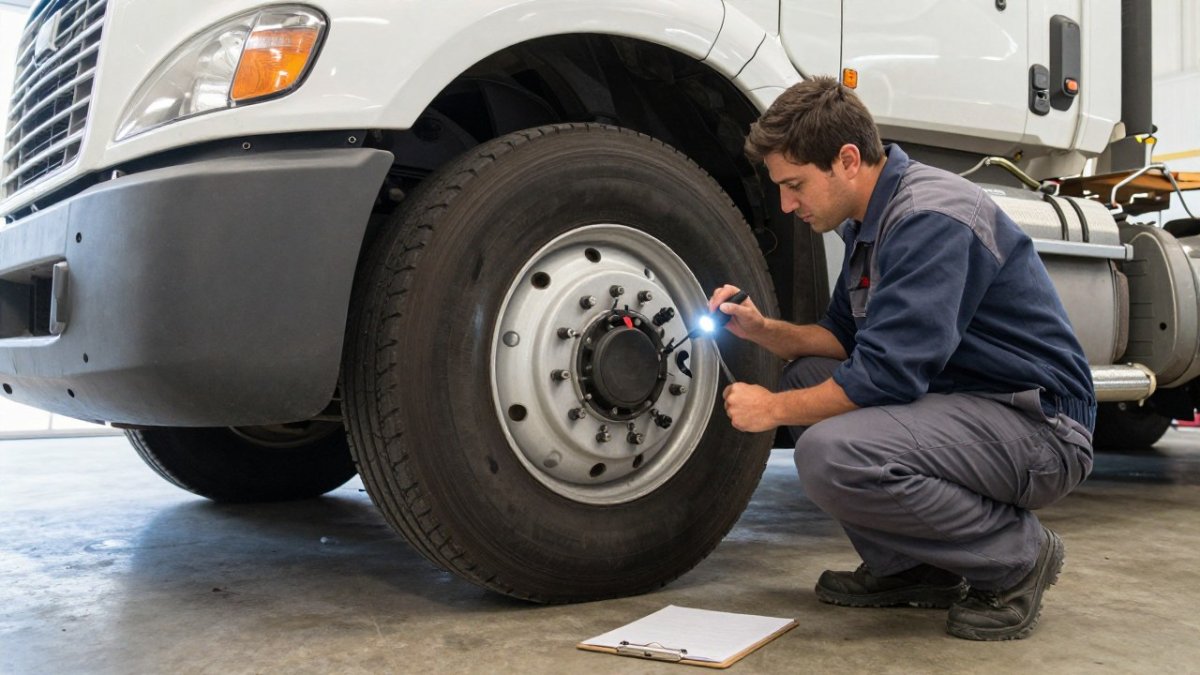
Drivers are the first line of defense. A pre-trip inspection takes minutes and catches problems before the truck leaves the yard.
- Test air pressure buildup and listen for leaks after shutting the engine off
- Check that the low-pressure warning signal works
- Look for cracked or frayed brake lines and loose clamps
The post-trip inspection matters just as much. A driver who notes a symptom at the end of the day gives the shop a head start before the next dispatch.
What a Qualified Technician Checks on the Lift
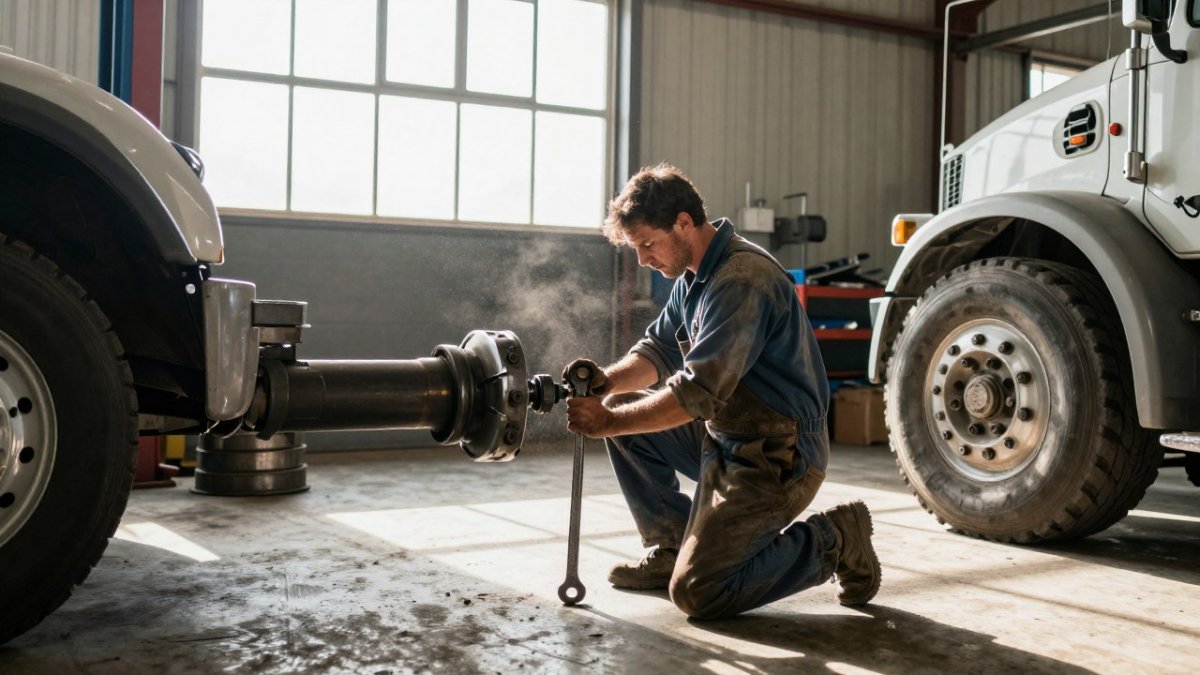
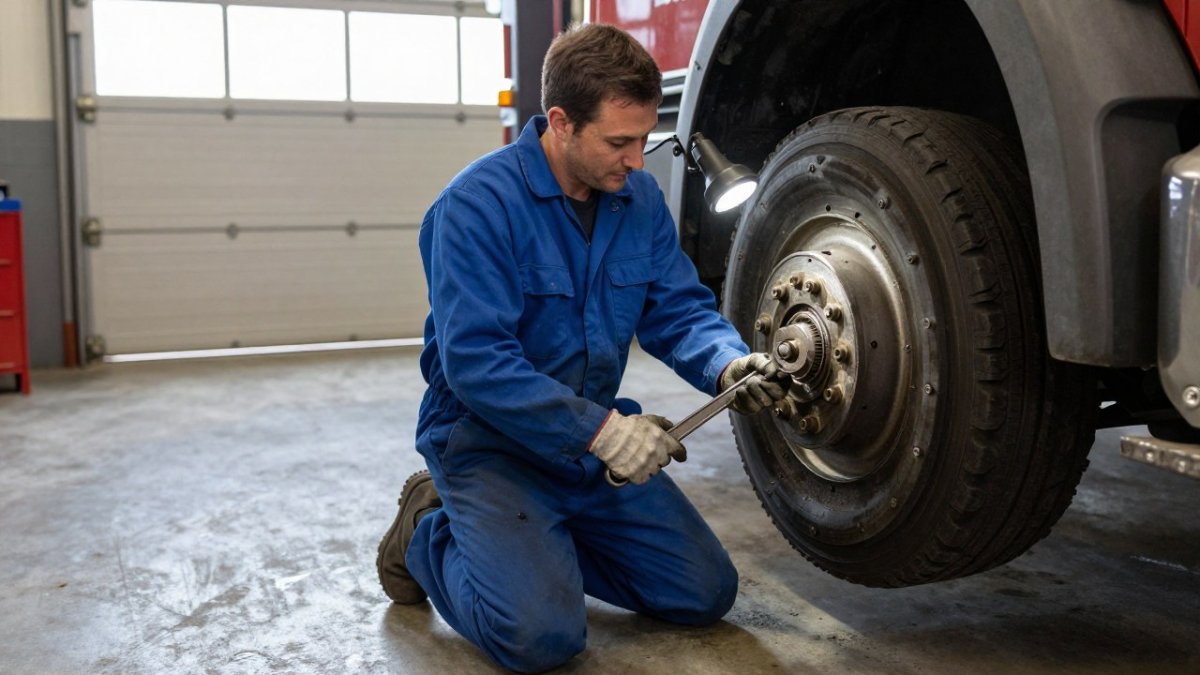
On the lift, a qualified technician measures what a driver cannot see: brake shoe lining thickness, drum condition, pushrod travel, brake chamber condition, and slack adjuster adjustment.
This is where early detection pays off. Our team performs these inspections as part of routine brake service, and the brake repair service we offer covers both the inspection and the repair that follows.
Air Brake Inspection for Trucks: Components and Failure Symptoms
Air brakes fail in predictable ways, and each component leaves its own signature. A component-by-component guide helps drivers and maintenance staff recognize what a symptom points to and when a truck should be pulled from service. The descriptions below reflect common failure patterns; the manufacturer's adjustment and wear limits always govern the final call.
Slack Adjusters
The slack adjuster converts pushrod stroke into rotation of the brake camshaft. Automatic slack adjusters maintain adjustment, but they cannot correct a foundation brake problem. Excessive pushrod travel, a slack adjuster that will not hold adjustment, or one that moves freely by hand points to worn components, a sticking mechanism, or an installation problem.
Brake Chambers
The brake chamber converts air pressure into mechanical force. A ruptured diaphragm causes weak braking or a persistent air leak, often heard as a hiss that does not stop. A cracked chamber housing or broken clamp band grounds the vehicle. Corrosion around the chamber and mounting bracket is common in winter-salt operations and should be noted before it becomes a failure.
Pushrods
Pushrods transfer force from the chamber to the slack adjuster. Bent or misaligned pushrods suggest binding in the foundation brake or a misinstalled chamber and can cause uneven braking or accelerated wear. A pushrod that does not return fully can leave the brake partially applied, generating heat and drag.
Brake Shoes and Drums
Brake shoes carry the lining that contacts the drum. Thin, cracked, or contaminated lining reduces stopping power. Drums can develop cracks, deep scoring, or heat checking; a scored drum wears new linings quickly and may need replacement along with the shoes. Lining thickness and drum condition should be measured, not estimated by eye, at every technician inspection.
Brake Lines, Hoses, and Fittings
Chafed lines, loose clamps, and corroded fittings lead to pressure loss that may not be obvious until the system is under demand. Inspect lines for routing damage, check fittings for corrosion, and confirm hoses are not rubbing against frame or suspension components. A line that is weeping air is a defect, not a maintenance item to defer.
Air Compressor and Governor
The compressor and governor supply and regulate air pressure. Slow pressure buildup, frequent compressor cycling, or a governor that does not cut in and out at the specified pressures signals a supply problem upstream of the brakes. Weak supply can mask itself as a brake problem until the truck is loaded and demand increases.
Low-Pressure Warning and System Checks
The low-pressure warning signal and the system's ability to build and hold pressure are part of every inspection. A warning that does not activate, or a system that loses pressure faster than the manufacturer's allowable leak rate, is a defect that must be corrected before the truck returns to service.
When to Escalate
A driver walkaround can identify symptoms, but it cannot measure lining thickness, verify pushrod travel against the adjustment limit, or confirm leak rates. Any suspected defect, a hiss, a soft pedal, a slack adjuster that will not hold, a cracked chamber, should move the truck to a qualified technician before the next dispatch.
Truck Brake Warning Signs Drivers Should Never Ignore
Some warning signs are loud, and some are quiet. The quiet ones cause the most damage.
- A pedal that feels soft or travels further than usual
- The low-pressure warning buzzer or light activating
- Hissing air when the brakes are applied or released
Any one of these justifies pulling the truck from service and having it checked. A common mistake is treating a soft pedal as "just how the truck feels." In practice, it usually means air is escaping somewhere it should not.
Building an Inspection Schedule Around Mileage, Duty Cycle, and Conditions
There is no single correct interval for every fleet, and any schedule that ignores duty cycle will either over-service long-haul tractors or under-service stop-and-go delivery units. For the deeper case behind this approach, see the benefits of preventive fleet maintenance programs. Set a baseline interval, then adjust it using miles driven, duty cycle, and operating conditions.
Start With a Baseline Interval
Most fleets begin with a documented driver inspection every trip and a qualified technician brake inspection at each preventive maintenance (PM) interval. A common pattern is a PM interval in the 25,000-mile range for long-haul tractors, with the brake-specific check folded into that visit. For medium-duty and short-haul units, the PM interval is often shorter, frequently 10,000 to 15,000 miles, because the duty cycle is harder on foundation brakes.
Adjust for Duty Cycle
Duty cycle is the single biggest driver of brake wear, and it is the factor mileage alone cannot capture. A tractor pulling 80,000 pounds over mountain grades and one running flat interstate at the same gross weight will not wear linings at the same rate. Consider these patterns:
- Long-haul interstate: relatively low brake applications per mile; a PM-based brake inspection is usually adequate, with closer attention to drag and slack adjuster condition.
- Short-haul and city delivery: frequent stops, heat cycling, and repeated low-speed applications; shorten the technician interval and add a mid-interval visual check.
- Heavy-haul and vocational: high gross weights and frequent braking under load; inspect more often and track lining thickness by axle position.
Adjust for Operating Conditions
Conditions compound duty cycle. Winter road salt accelerates corrosion on lines, fittings, and chambers. Dusty job sites and gravel routes contaminate linings and drum surfaces. Frequent trailer swaps and uneven loading change how braking force is distributed. Fleets operating in these conditions should inspect more often and record the conditions alongside the inspection result so wear trends can be tied back to routes.
Set Escalation Triggers
A schedule is only useful if it defines when to deviate from it. Build in these triggers:
- Any driver-reported symptom, soft pedal, hissing air, pulling, or unusual noise, moves the truck to the front of the queue for a technician inspection before the next dispatch.
- A lining measurement approaching the manufacturer's wear limit schedules replacement at the next planned downtime rather than at the next PM.
- A slack adjuster that will not hold adjustment, or pushrod travel outside the adjustment limit, removes the truck from service until corrected.
Watch out: shortening intervals without recording why makes the schedule look arbitrary during an audit and hides the route-level cause of accelerated wear.
Review and Recalibrate
Review inspection records monthly and compare actual wear against the interval assumptions. If a group of trucks consistently reaches the wear limit before the scheduled inspection, the interval is too long for that duty cycle.
The article suggests starting points for technician brake inspection intervals, then adjusting them for how the truck is used.
| Fleet type | Typical PM interval | Note |
|---|---|---|
| Long-haul tractors | 25,000-mile range | Brake-specific check folded into PM visit |
| Medium-duty and short-haul units | 10,000 to 15,000 miles | Shorter because duty cycle is harder on foundation brakes |
| Long-haul interstate | PM-based brake inspection | Relatively low brake applications per mile |
| Short-haul and city delivery | Shorten technician interval | Add a mid-interval visual check |
| Heavy-haul and vocational | Inspect more often | Track lining thickness by axle position |
| Hilly and mountainous routes | Shorten intervals | Inspect drums and linings closely at every visit |
How to Reduce Truck Downtime With Maintenance and Inspection Records
Records turn inspections into a system.
That history does two things. First, it supports safety compliance during a DOT inspection, where documented maintenance demonstrates a fleet takes its obligations seriously. Second, it lets a shop plan work around dispatch instead of reacting to a failure at the worst possible time.
For managers weighing maintenance spend against downtime cost, our heavy duty truck maintenance pricing guide gives useful context on what different service categories involve.
The DOT inspections service we provide covers the full inspection a fleet needs to stay road-ready, and the records from routine brake checks feed directly into that process.
Set Up a Recurring Brake Inspection Program for Your Fleet
A recurring program is the difference between hoping brakes hold up and knowing they will. The setup is straightforward:
- Document the current condition of every truck's brake system as a baseline.
- Set inspection intervals based on mileage, duty cycle, and route conditions.
- Assign driver pre-trip and post-trip checks with a written record for each.
- Schedule technician inspections at every preventive maintenance visit.
- Review the records monthly to spot wear trends and adjust intervals.
Fleets that run this cycle generally tend to plan repairs rather than react to failures. Our fleet maintenance service is built around exactly this kind of recurring schedule, with preventive care designed to keep trucks safe, efficient, and road-ready.
Whether your operation runs a handful of trucks or a full fleet, a scheduled brake inspection program is one of the highest-value maintenance decisions you can make.
Brake problems rarely announce themselves until they are expensive. A documented inspection schedule catches wear while it is still a maintenance line item, and our team can build that schedule around your routes and duty cycles.
Frequently Asked Questions
How often should commercial truck brakes be inspected?
Many fleets pair driver pre-trip and post-trip checks with a full technician inspection at each preventive maintenance interval. Trucks on stop-and-go routes, heavy loads, or mountain terrain need shorter intervals because brake wear accelerates. Brake components are part of the inspection covered during a DOT inspection. Track mileage and duty cycle for each unit rather than applying one schedule to the whole fleet.
What happens if a commercial truck fails a brake inspection?
A truck with defective brakes can be placed out of service at a roadside DOT inspection until repairs are made, which strands the load and the driver. Brake violations are among the most common reasons commercial vehicles are taken off the road. Catching the same defect during a scheduled truck brake inspection lets you plan the repair before it becomes an emergency.
Are regular commercial truck brake inspections worth it?
Planned brake service generally avoids the added costs of a roadside breakdown, a tow, and an emergency repair. Inspections can catch worn shoes, leaking chambers, and misadjusted pushrods before they lead to larger repairs.
What are the warning signs of commercial truck brake problems?
Watch for a soft or spongy pedal, longer stopping distance, air pressure that drops or takes long to build, a pull to one side when braking, squealing or grinding, and visible air leaks at lines or chambers. Drivers should also report a pushrod stroke that looks out of adjustment. Any of these means the truck needs a qualified technician to look at the brake system before it goes back out on a run.