 blog
How to Choose the Best Truck Mechanic for Fleet Repairs
Last Updated: November 5, 2026
Quick Summary
Choose the best truck mechanic for fleet repairs by scoring shops on certifications, diagnostic technology, response time, service coverage, warranty terms, and pricing transparency. Ask for written pricing breakdowns and response-time commitments, and favor shops offering both mobile service and in-shop capability.
- Score each shop from 1 to 5 per criterion, then weight what matters most to your operation.
- Mobile service wins for routine work on parked fleets and roadside breakdowns; major engine work needs a shop.
- Ask every shop to break pricing down in writing, including labor rate, diagnostic fees, and parts markup.
- A written checklist with signed driver reports and retained repair orders survives turnover and satisfies recordkeeping.
- Shopping strictly on the lowest hourly rate often backfires when the shop lacks diagnostic tools.
Table of Contents
- Why the Right Truck Mechanic Makes or Breaks Your Fleet
- Fleet Truck Maintenance Services: What to Look For
- Mobile Truck Repair for Fleets: When On-Site Service Pays Off
- The Fleet Maintenance Checklist Every Manager Should Use
- How to Reduce Fleet Maintenance Costs Without Cutting Corners
- Comparing Truck Repair Shops: A Criteria-Based Approach
- Schedule Your Fleet Repair Consultation
- Frequently Asked Questions
Why the Right Truck Mechanic Makes or Breaks Your Fleet
A breakdown on I-80 at 2 AM costs more than a repair bill. It costs you a delivery window, a customer, and a driver sitting idle. That is why choosing the best truck mechanic for fleet repairs is one of the highest-stakes vendor decisions a fleet manager makes.
At Fairfield Truck Repair, we see the difference between a shop that guesses and a shop that diagnoses. A mechanic who replaces parts until something works drains your budget. A mechanic who finds the root cause keeps your trucks moving.
Fleet repairs are the scheduled and unscheduled work that keeps commercial vehicles road-ready, from brake jobs to full engine overhauls. Get the partner right and downtime shrinks. Get it wrong and every invoice becomes a gamble.
Below, we break down what to look for, when mobile service pays off, and how to compare shops on evidence rather than sales pitches.
Fleet Truck Maintenance Services: What to Look For
The best fleet truck maintenance services share four traits: factory-trained technicians, real diagnostic technology, a documented maintenance schedule, and a clear workmanship policy.
Start with certifications. Ask directly whether a shop's technicians are certified and factory-trained.
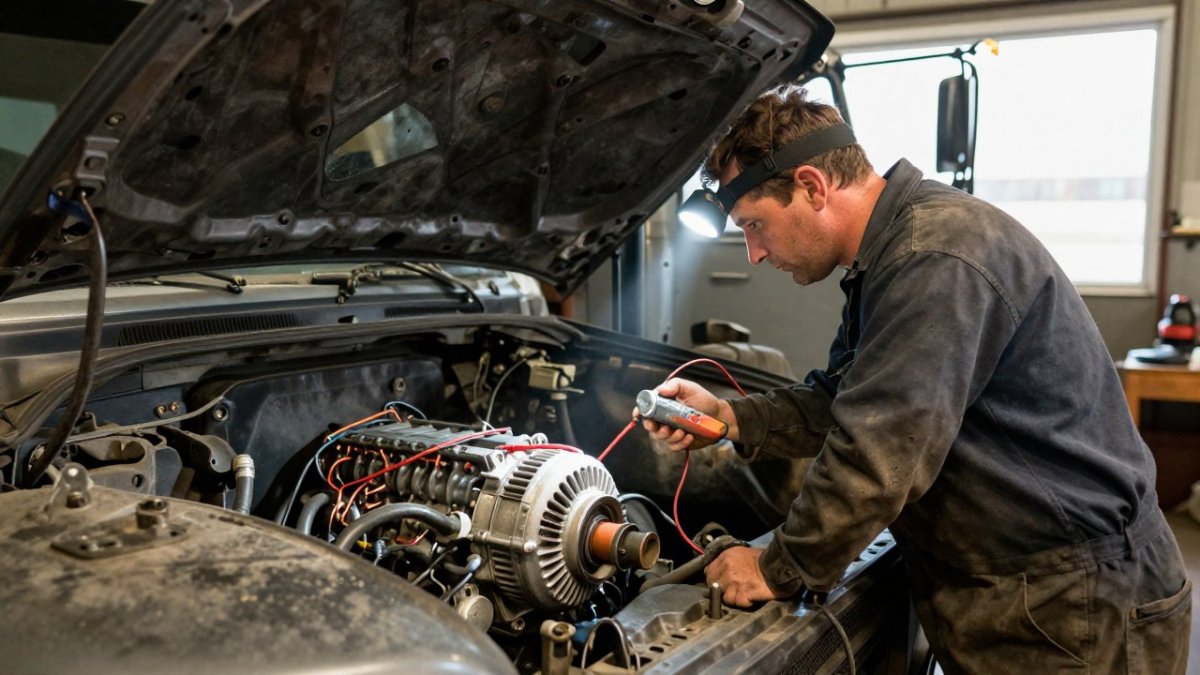
Then check diagnostic capability. Modern commercial vehicles run on complex electronics, so ask what diagnostic tools a shop uses before you commit.
- Preventive maintenance programs with set service intervals
- Diesel engine diagnostics and repair capabilities
- Roadside assistance and emergency service
- Repair parts sourcing and warranty terms
- Service department capacity for fleet vehicle volume
A common mistake is choosing on price alone. The cheapest oil change means nothing if the shop misses a failing brake chamber. If you want to see what a full program includes in practice, review our fleet maintenance service offering.
Mobile Truck Repair for Fleets: When On-Site Service Pays Off
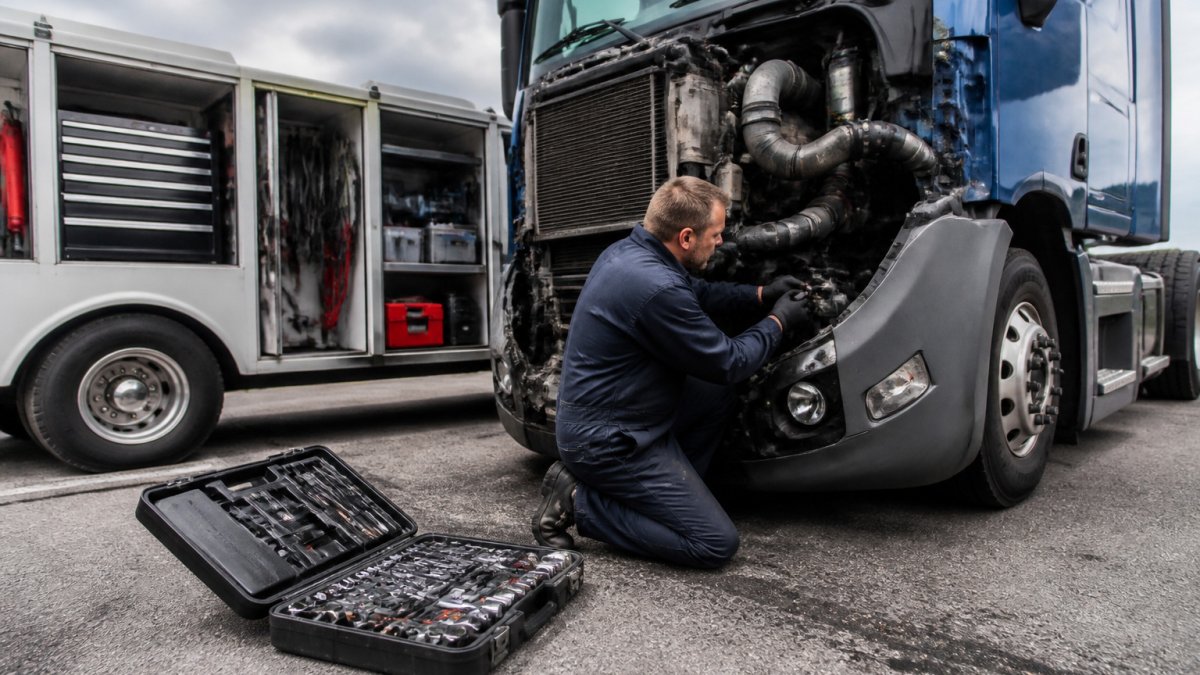
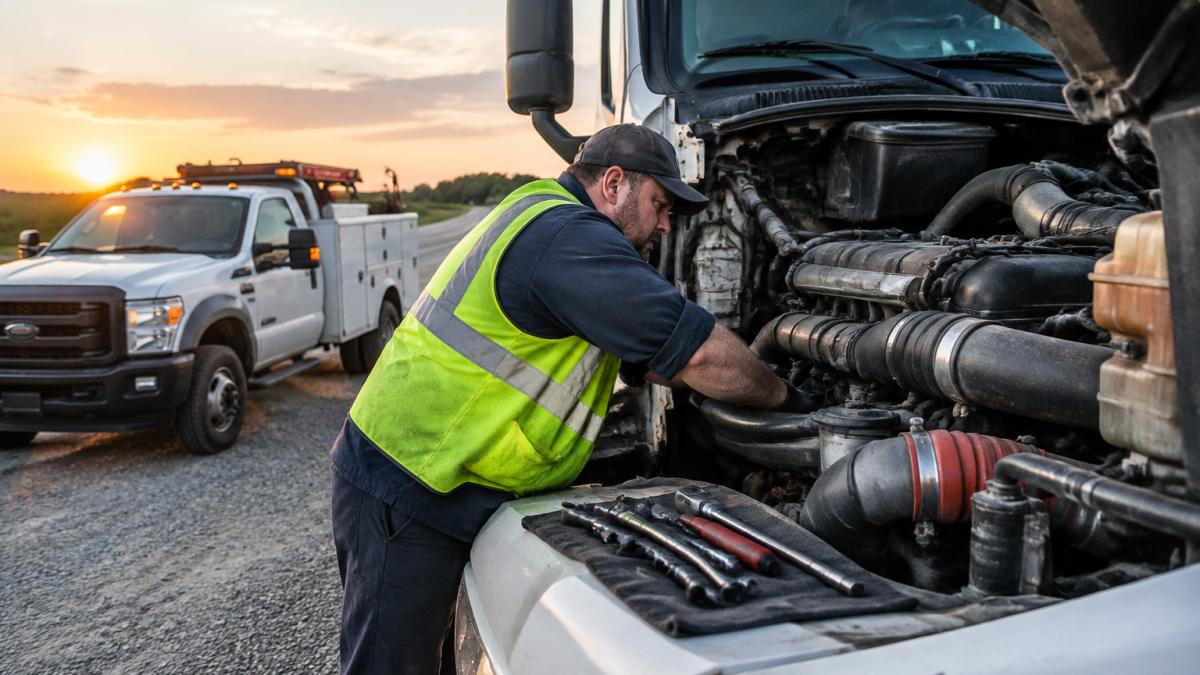
Mobile truck repair for fleets pays off when downtime costs more than the service call. On-site service brings a diesel mechanic and a service truck to your yard, your dock, or the roadside.
The woman is American.
A truck stuck far from the shop can lose a full day of revenue, which is why on-site service matters for many fleets.
When does mobile beat the shop? Consider these cases:
- Routine service on a parked fleet: mobile wins. No deadhead miles.
- Roadside breakdowns: mobile wins if the repair fits a field kit.
- Major engine or transmission work: the shop wins. That needs a lift and a bay.
The trade-off is capability. Mobile units handle many repairs, but not all. A shop that offers both gives you options instead of a dead end. For a deeper breakdown of the trade-offs, read our comparison of mobile truck repair versus shop service.
The Fleet Maintenance Checklist Every Manager Should Use
A fleet maintenance checklist turns reactive repair into a preventive maintenance program, but only if it is built around the inspections that actually trigger roadside violations and out-of-service orders, not a generic car-owner list. Use this checklist to standardize inspections across every commercial vehicle in your fleet and to create the paper trail a fleet manager needs at audit time.
Here is a checklist for commercial truck operations, organized around the inspection categories that matter most:
-
Daily driver walk-around: tires, lights, fluid leaks, brake feel, coupling devices, and load securement. Drivers should sign off, not just glance.
-
Weekly: tire pressure and tread depth (including spare), belts and hoses, battery terminals, air dryer purge, and wheel-end leaks.
-
Monthly: brake adjustment and lining thickness, suspension and airbag inspection, fluid levels, and a full diagnostic scan for stored fault codes.
-
Quarterly: full diagnostics scan, alignment, drivetrain inspection, and a review of any repeat fault codes across the fleet.
-
Every service: log mileage, parts used, technician notes, and the repair order number so the record ties back to the invoice.
The point is consistency, but the mechanism is documentation. A maintenance schedule that lives in one manager's head fails when that manager is out. A written checklist with signed driver reports and retained repair orders survives turnover and satisfies the recordkeeping requirements that apply to commercial motor carriers.
A checklist that only tracks mileage intervals can miss defects that trigger out-of-service orders, such as brake adjustment, tire tread depth, and lighting.
What most guides miss is the logging step and the feedback loop. Without records, you cannot spot a truck that keeps eating brake pads, and you cannot prove compliance at inspection time. A shop that reviews your logs quarterly can spot a pattern, same wheel end, same fault code, same driver, and fix the root cause instead of the symptom. If you want to understand the payoff before committing, review the benefits of preventive fleet maintenance programs.
How to Reduce Fleet Maintenance Costs Without Cutting Corners
You reduce fleet maintenance costs by extending component life, not by skipping service. Preventive maintenance can be the cheaper path, even when the upfront spend feels higher. The invoice structure, not just the hourly rate, is where many fleet budgets leak.
Deferred maintenance always bills you later, usually at the worst moment and with a towing charge attached. The savings show up in three places:
- Fewer emergency repairs. Catching a worn belt beats replacing a failed engine.
- Longer vehicle life. Well-maintained heavy-duty trucks stay in service longer and hold resale value.
- Better fuel and tire performance. Small mechanical issues quietly burn money.
Where the money actually goes. Ask every prospective shop to break its pricing down in writing, including labor rate, diagnostic fees, parts markup, any after-hours or dispatch charges, and any fleet discounts.
Diagnostic fees can be a surprise. Ask which fee model applies before the truck is in the bay, since a flat fee is often easier to budget than an open-ended hourly diagnosis.
After-hours charges. Ask any shop to state its after-hours and emergency charges in advance, rather than relying on a vague 'call for pricing.'
Fleet discounts. Ask how any volume discount is measured, whether by invoice count, spend, or contract term, and whether it resets monthly or annually.
Consolidating vendors also helps. One shop that knows your fleet history avoids repeat diagnostics and duplicate parts markups. Ask every provider how they price fleet work and whether they offer a maintenance plan with defined service levels. For a sense of what heavy-duty work typically runs, our heavy-duty truck maintenance pricing guide walks through the cost structure.
Watch out: shopping strictly on the lowest hourly rate often backfires when the shop lacks diagnostic tools and bills more hours hunting for the fault, the effective cost per repair is what matters, not the posted rate.
Comparing Truck Repair Shops: A Criteria-Based Approach
Compare truck repair shops on six criteria, scored the same way for each: certifications, diagnostic technology, response time, service coverage, warranty terms, and pricing transparency.
Score each shop from 1 to 5 per criterion, then weight what matters most to your operation. A fleet running tight delivery windows should weight response time and uptime heavily. A fleet with varied equipment should weight repair capabilities and vehicle class coverage.
| Criterion | What to Ask | Why It Matters |
|---|---|---|
| Certifications | Are technicians certified and factory-trained? | Correct procedures on complex diesel systems |
| Diagnostics | What diagnostic technology do you use? | Root-cause repair, not parts swapping |
| Response time | How fast is dispatch for emergency service? | Protects vehicle uptime |
| Coverage | Which vehicle classes and service areas do you handle? | Fewer vendors to manage |
| Warranty | What workmanship and parts guarantees apply? | Protects your repair budget |
| Pricing | Is fleet pricing quoted upfront? | No invoice surprises |
When comparing shops, ask for response-time commitments in writing and a service-level agreement that spells out priorities when a regular technician is booked.
Fairfield Truck Repair offers expert heavy-duty truck repair, specialized diesel diagnostics, comprehensive fleet maintenance, and roadside service.
Schedule Your Fleet Repair Consultation
The right partner turns fleet repairs from a recurring headache into a managed cost. Start by scoring two or three shops against the criteria above, then ask each one for a written maintenance plan and response-time commitment.
Fairfield Truck Repair offers expert heavy-duty truck repair, specialized diesel diagnostics, comprehensive fleet maintenance, and roadside service to keep your vehicles road-ready.
Get started with Fairfield Truck Repair and cut the downtime that eats your margins. Contact our team to schedule your fleet repair consultation.
Frequently Asked Questions
How do I choose a truck mechanic for fleet repairs?
Start by verifying certifications and experience with your vehicle types. Ask about diagnostic equipment, response times, and warranty policies. Request a sample service agreement and check references from similar fleets. A shop that specializes in fleet repairs should offer scheduled maintenance plans, mobile service, and transparent pricing. Visit the facility to confirm it has the capacity for heavy-duty trucks and a process for prioritizing urgent breakdowns.
What services should a fleet truck repair shop offer?
A full-service fleet shop should handle preventive maintenance, diesel engine diagnostics, brake and suspension work, DOT inspections, and roadside assistance. Look for shops that provide detailed repair records and can help you build a fleet maintenance checklist tailored to your routes and vehicle classes.
Is mobile truck repair a good option for fleets?
Mobile truck repair can suit some fleets. Ask providers whether they offer on-site service, what response times they commit to, and what after-hours availability they have before you commit.
How can fleet maintenance reduce truck downtime?
A structured preventive maintenance program catches small issues before they become breakdowns. By following a fleet maintenance checklist and scheduling service during planned idle windows, you avoid unplanned repairs. Many fleets also use mobile service for routine tasks.