 How-to
Fleet Maintenance for Owner-Operators: A 2026 Guide
Table of Contents
- Why Reliable Fleet Maintenance Matters for Owner-Operators
- Building a Preventative Maintenance Checklist for Semi-Trucks
- Tracking Average Cost of Fleet Maintenance Per Mile
- Fleet Maintenance Software for Small Fleets
- Contract Maintenance Plans vs. Self-Managed Repairs
- Roadside Violation Prevention and Safety Compliance
- DIY vs. Professional Shop: When to Call a Specialist
- Frequently Asked Questions
Last Updated: September 20, 2026
Why Reliable Fleet Maintenance Matters for Owner-Operators
Every hour of downtime costs money. Reliable fleet maintenance owner operators rely on prevents expensive breakdowns and lost revenue.
Preventative maintenance catches problems before they strand you, avoiding expensive emergency repairs and DOT violations that result in fines or out-of-service orders.
Owner-operators who switch from reactive repairs to preventative maintenance find the upfront cost of regular inspections pays for itself in avoided breakdowns.
Building a Preventative Maintenance Checklist for Semi-Trucks
A preventative maintenance checklist tells you what to inspect, when to inspect it, and what to watch for, keeping you in control of vehicle reliability.
Core Inspection Intervals and Component Tracking
Daily pre-trip inspections should cover:
- Tire condition and visible damage
- Brake pedal feel and responsiveness
- Lights (headlights, taillights, clearance lights)
- Fluid leaks under the truck
- Windshield wipers and visibility
- Horn and safety equipment
Monthly inspections add depth:
- Engine oil and coolant levels
- Transmission fluid condition
- Battery terminals and connections
- Suspension components for cracks or wear
- Coupling devices and kingpin lubrication
- Air filter condition
Annual comprehensive inspections should include:
- Full brake system evaluation
- Bearing and seal inspection
- Driveline components
- Electrical system diagnostics
- Frame and structural integrity check
- Emissions system compliance
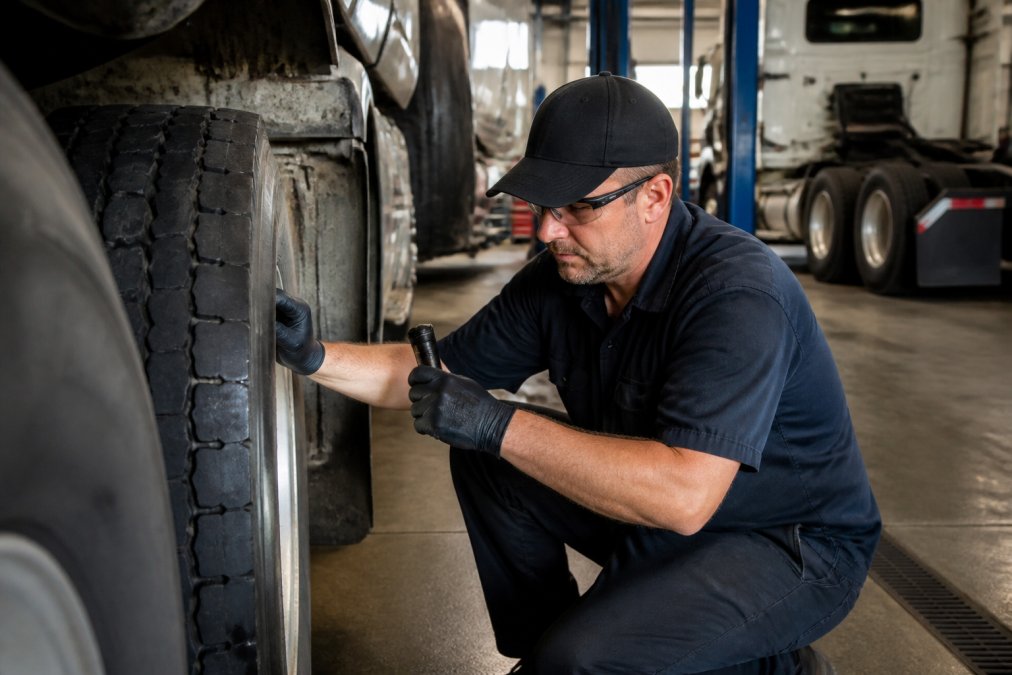
Document all inspections, this record proves DOT compliance and reveals patterns indicating underlying issues.
Tire Tread Depth and Pressure Monitoring
Tires are your only contact with the road. The FMCSA requires minimum tread depth of 4/32 inches on drive wheels and 2/32 inches on other wheels.
Check tire pressure weekly. Under-inflated tires wear faster and reduce fuel efficiency; over-inflated tires wear in the center. Most semi-trucks run 100-110 PSI, check your truck's specifications.
Measure tread depth with a penny test or gauge.
Fluid Analysis and Brake System Checks
Change oil every 10,000 to 15,000 miles for modern diesel engines, using the grade specified in your owner's manual.
Tracking Average Cost of Fleet Maintenance Per Mile
Tracking maintenance costs helps you budget, identify problems early, and ensure tax compliance.
Calculating Maintenance Expenditure and Cost-Per-Mile Benchmarks
Track every maintenance expense in a spreadsheet or log and total spending monthly.
Tax Categorization and Deduction Strategy
How you categorize repairs directly affects your tax liability and audit risk.
Repairs vs. Improvements: The Critical Distinction
Repairs are deductible in full:
- Replacing a worn brake pad
- Fixing a cracked windshield
- Patching a tire
- Replacing a failed alternator
- Repainting a damaged door panel
- Replacing a broken mirror
Improvements must be capitalized and depreciated:
- Replacing an engine with a rebuilt or new engine (extends useful life)
- Major transmission overhaul (restores asset to like-new condition)
- Replacing the entire brake system (not just pads)
- Frame straightening after major collision damage
- Upgrading to a newer model cab or sleeper
Maintenance Plans and Prepaid Service Agreements
Parts and Labor Documentation
Escrow Account Strategy and Cash Flow Management
Set aside money monthly in a dedicated account for maintenance and repairs to avoid scrambling when major repairs come due.
Record Organization for DOT and IRS Audits
Maintain vehicle inspection reports, maintenance records with dates and mileage, repair invoices, tire records, and brake documentation for DOT compliance. For IRS audits, keep itemized invoices, receipts, mileage logs, and contracts.
Fleet Maintenance Software for Small Fleets
Digital record-keeping simplifies compliance and helps you spot patterns. A spreadsheet works if you're disciplined. Specialized software works better because it reminds you when inspections are due and stores everything in one place.
Digital Record-Keeping for DOT Audits
Digital records are backed up and searchable, allowing you to quickly answer DOT questions during roadside inspections.
Contract Maintenance Plans vs. Self-Managed Repairs
Contract maintenance plans offer predictable costs but you pay whether you need service or not. Self-managed repairs cost less if your truck runs reliably but more if you face constant emergencies.
Roadside Violation Prevention and Safety Compliance
DOT officers look for bald tires, broken lights, leaking fluids, and also check your logbook, maintenance records, and vehicle inspection reports.
DIY vs. Professional Shop: When to Call a Specialist
Some repairs you can do. Some you shouldn't attempt. The decision isn't just about mechanical skill, it's about warranty coverage, liability exposure, and whether a mistake could strand you or create legal liability.
The Warranty Implication: What Voids Coverage
Unauthorized repairs can void manufacturer warranty. Most diesel engine warranties require repairs by authorized dealers using OEM parts.
Liability and Safety-Critical Systems
If you perform a repair on safety-critical systems and it causes an accident, you could be held liable.
Decision Matrix: DIY vs. Professional
Use this framework to decide whether to attempt a repair yourself.
DIY maintenance works for:
- Checking and topping off fluids (engine oil, coolant, windshield washer fluid, power steering fluid). These require no special tools and no safety risk if done incorrectly.
- Replacing air filters (engine air filter, cabin air filter). These are designed for owner replacement. Follow the manual, use the correct filter, and you're done.
- Basic tire maintenance and pressure checks. Checking pressure with a gauge is safe. Rotating tires yourself requires a jack and jack stands (safety equipment), so many owner-operators outsource this. Patching a small puncture is DIY-able; replacing a tire is typically outsourced due to equipment needs.
- Cleaning and inspecting components. Washing the truck, cleaning the engine bay, inspecting hoses and belts for visible damage, these are safe and informative.
- Replacing windshield wipers. These are designed for owner replacement and take 5 minutes.
- Checking light operation. Turn on lights and walk around the truck. If a light is out, note it for professional replacement.
- Replacing fuses. The fuse panel is labeled. Replacing a blown fuse takes 30 seconds. If the fuse blows again immediately, that's a sign of an electrical problem that needs professional diagnosis.
Call a professional for:
- Brake system work (pads, rotors, calipers, lines, fluid bleeding). Brakes are safety-critical. A mistake here can cause brake failure. Professional shops have the equipment to bleed air from brake lines and test brake pressure. They also have liability insurance.
- Transmission and driveline service (transmission fluid, filter, seal replacement, driveline bearing service). These systems are complex. Mistakes can cause transmission failure, which costs $4,000-$8,000 to repair. Professional shops have the specialized equipment and knowledge.
- Engine diagnostics and repair (engine codes, sensor replacement, fuel system service). Modern diesel engines have dozens of sensors and computer systems. You cannot diagnose these with a wrench. You need a technician with proper training and diagnostic equipment (code readers, pressure gauges, oscilloscopes). A misdiagnosis can lead to replacing expensive parts that weren't actually broken.
- Electrical system troubleshooting (alternator, starter, battery, wiring). Electrical problems are notoriously difficult to diagnose. A professional with a multimeter and wiring diagrams can find the problem in an hour. You could spend days guessing. If you accidentally short a circuit while troubleshooting, you could damage the entire electrical system.
- Suspension and steering work (springs, shocks, tie rods, steering box). These affect vehicle handling and safety. A mistake can cause loss of control. Professional shops have alignment equipment and can verify that repairs are correct.
- Emissions system service (DPF regeneration, SCR system service, EGR valve cleaning). These systems are complex and regulated by the EPA. Improper service can cause the truck to fail emissions testing or trigger warning lights. Some repairs require specialized software.
- Coupling and kingpin service (coupling lubrication, kingpin inspection, fifth wheel maintenance). These are critical for trailer attachment. A failure can cause trailer separation, which is catastrophic. Professional shops know the specifications and can verify proper installation.
Finding and Vetting a Professional Shop
When you find a good mechanic, stick with them. A mechanic who knows your truck's history can spot developing problems faster than someone seeing it for the first time. They understand your truck's quirks and can recommend preventative measures before failures occur.
When evaluating a shop:
- Ask for references from other owner-operators. Word-of-mouth is the best indicator of reliability.
- Verify they have ASE (Automotive Service Excellence) certification for diesel trucks. ASE certification requires passing a test and maintaining continuing education.
- Ask about their diagnostic process. A good shop will explain what they found, why it needs repair, and what the repair involves before starting work.
- Request itemized invoices that separate parts and labor. This helps you understand costs and supports your tax records.
- Ask about warranty on repairs. Ask about warranty on repairs. This shows they stand behind their work.
- Confirm they accept your insurance or payment method before authorizing work.
Frequently Asked Questions
How can owner-operators reduce unexpected truck repair downtime?
Implement a preventative maintenance schedule that tracks tire tread depth, fluid levels, and brake condition before failures occur. Use fleet maintenance software to log service dates and set automated reminders. Schedule inspections during planned downtime rather than reacting to roadside breakdowns. Partner with a repair shop that offers 24/7 roadside assistance so if an emergency does happen, response time is minimized and your operation stays on schedule.
What is the average cost of fleet maintenance per mile for semi-trucks?
Maintenance costs typically range from $0.12 to $0.25 per mile depending on vehicle age, duty cycle, and whether you follow preventative schedules. Owner-operators who track expenses closely and maintain consistent PM schedules often stay at the lower end. Costs include tire rotation, fluid changes, filter replacements, and brake inspections. Setting aside funds in an escrow account based on your cost-per-mile helps smooth unexpected repair expenses across the year.
Should owner-operators use fleet maintenance software to track repairs?
Yes, especially for DOT compliance and tax deductions. Digital record-keeping creates an audit trail that protects you during inspections and proves you're maintaining regulatory safety standards. Software also tracks maintenance expenditure, helping you identify cost trends and plan budgets. For small fleets of 4-5 trucks, cloud-based solutions eliminate the need for complex spreadsheets and make it easy to access records from the road.
What are the benefits of outsourcing fleet maintenance vs. DIY repairs?
Contract maintenance plans with professional shops offer predictable costs, expert diagnostics, and warranty protection. DIY repairs work for routine items like filter changes but miss underlying issues that cause component failure. Professional shops have specialized diesel diagnostics equipment and can identify problems before they cause roadside violations or safety failures. For owner-operators running tight schedules, outsourcing minimizes uptime loss and reduces liability risk.